Understanding Hyrax, Haas, and Bonded Palatal Expanders
Hyrax, Haas, or Bonded: Which Palatal Expander Fits?
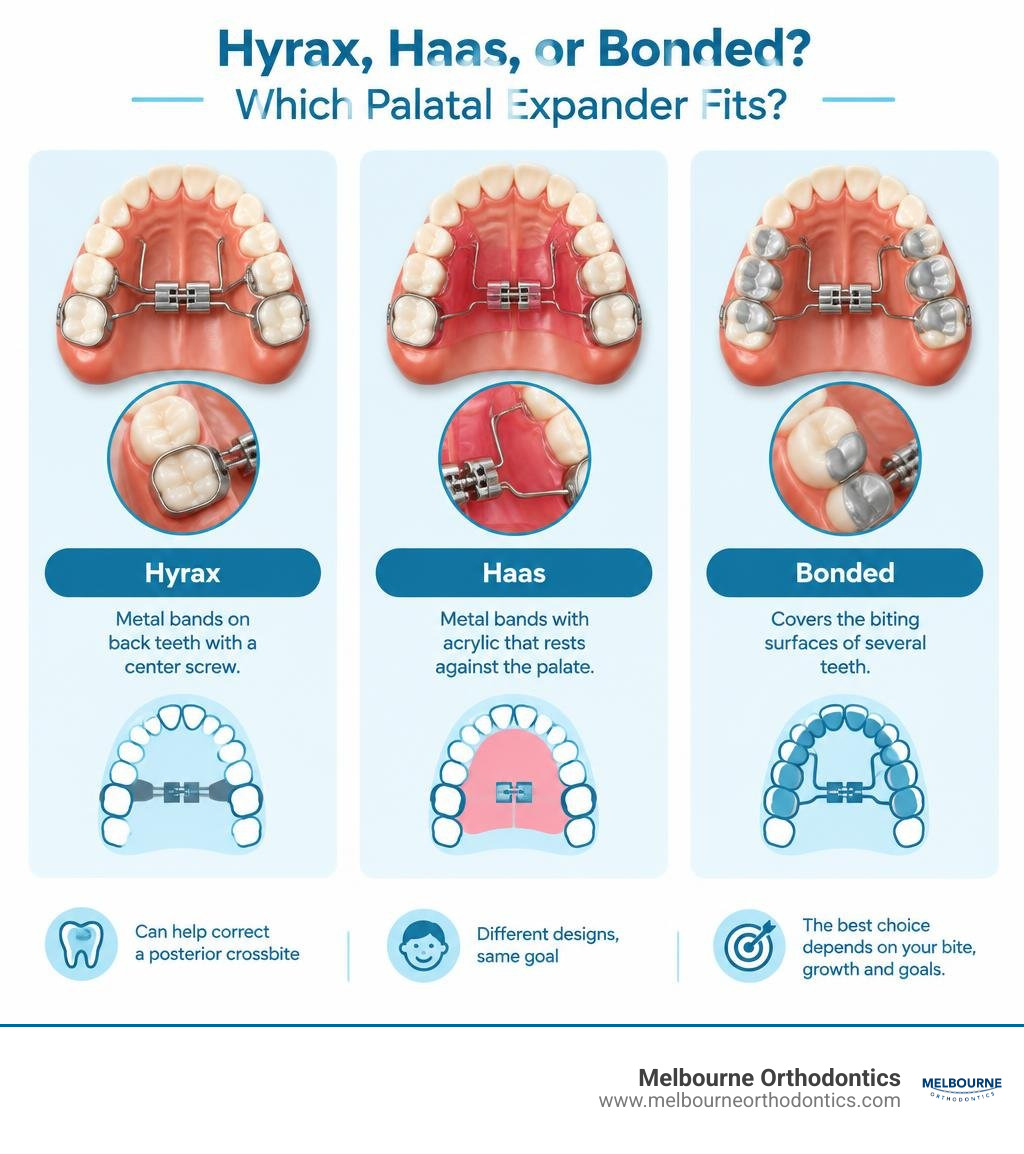
A Hyrax palatal expander uses a metal screw and bands on the back teeth to widen a narrow upper jaw. A Haas expander does the same job but adds acrylic that rests against the palate. A bonded expander covers the biting surfaces of several teeth, which can help control how the bite changes during expansion. The best choice depends on your bite, growth, and treatment goals.
These appliances can help correct a posterior crossbite, where the upper back teeth bite inside the lower teeth. Their designs differ, but no one type is best for everyone.
I’m Dr. Chad Reddick, an orthodontist at Melbourne Orthodontics with three years of specialized orthodontic training. I use that training to help families in Melbourne and Indian Harbour Beach decide whether a hyrax palatal expander or another design fits their treatment plan.
Hyrax palatal expander terms simplified:
- palatal expander before and after results
- rapid palatal expanders
- palatal expander side effects on the nose
What Is a Hyrax Palatal Expander and How Does It Work?
When patients visit our offices in Melbourne and Indian Harbour Beach, FL, narrow upper jaws and crowded teeth are among the most common issues we see. A narrow palate can alter a child’s bite, speech, and smile harmony. That is where understanding the purpose of an expander becomes essential.
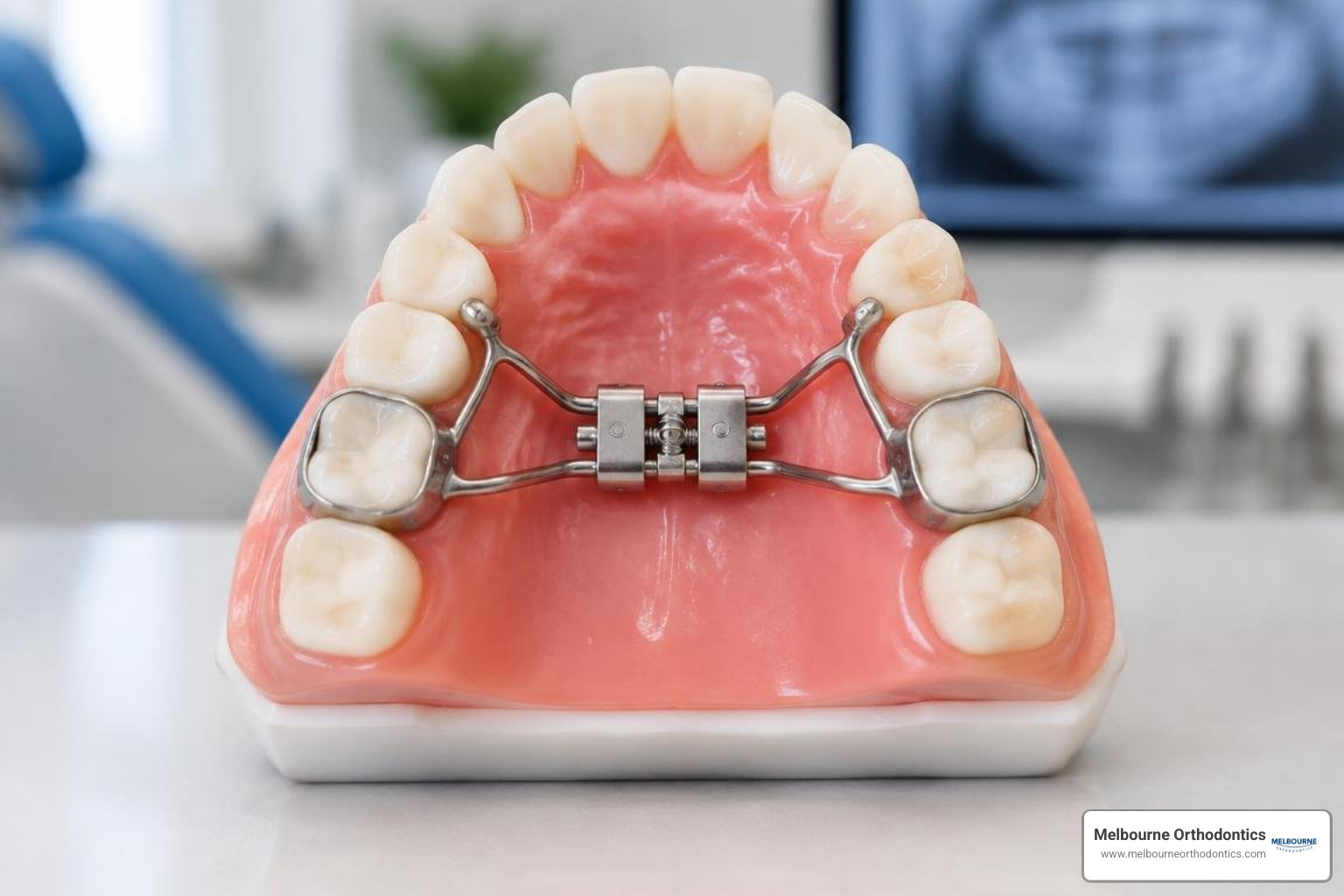
The hyrax palatal expander is an all-metal, tooth-borne rapid maxillary expansion (RME) device. It features an integrated center jackscrew supported by sturdy stainless steel arms welded to bands cemented around the permanent first molars and often the first premolars (or primary molars in younger kids).
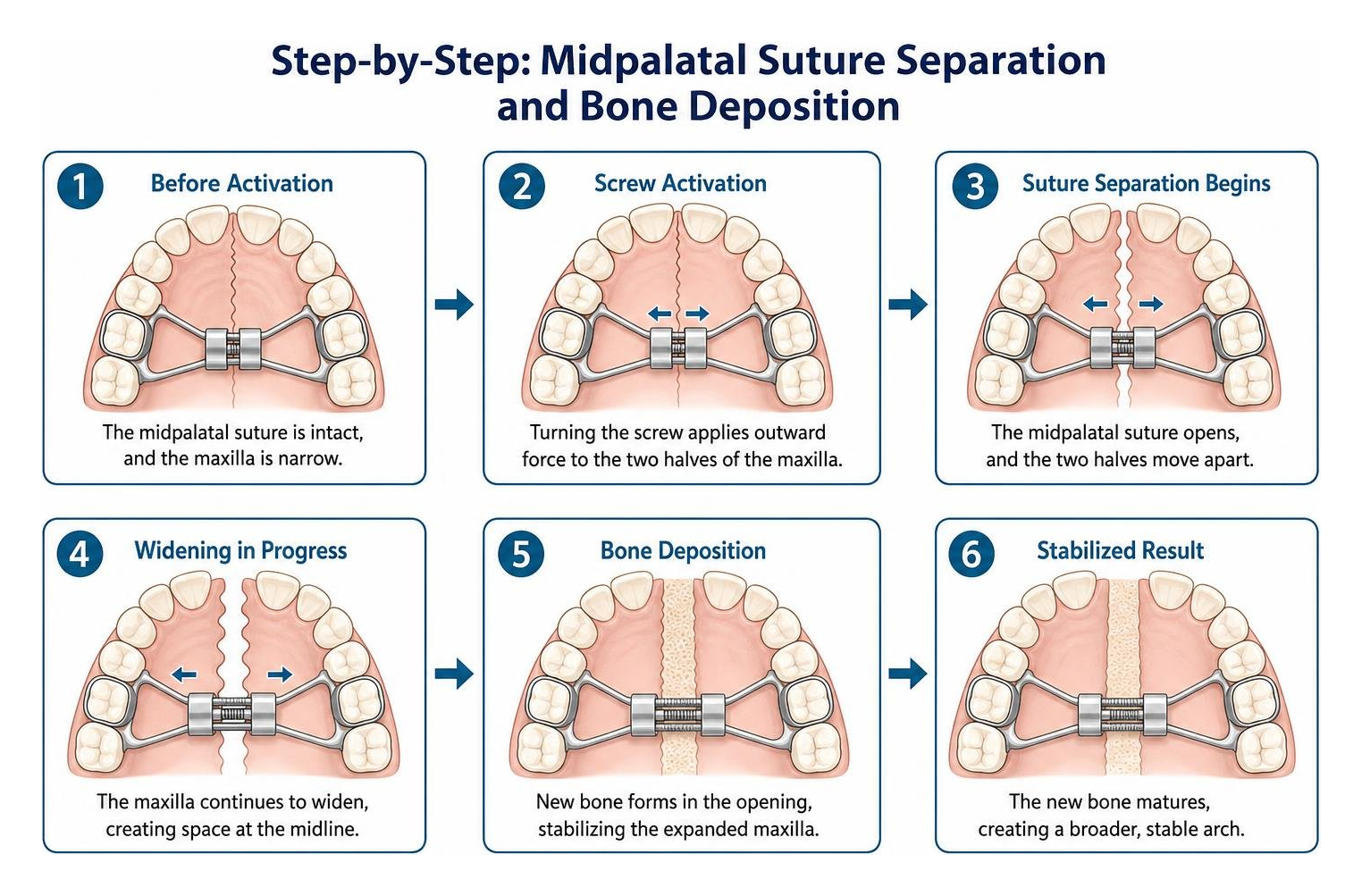
The appliance works by exerting outward orthopedic force directly against the midpalatal suture—the anatomical joint connecting the two halves of the upper jaw (maxilla). In growing children and adolescents, this suture has not yet fused solid. Turning the central screw creates a gentle, continuous outward tension that separates the halves of the maxilla at the midline. Over time, the body fills this widened space with new bone, establishing a broader, more stable foundation for the teeth.
Key Indications and Contraindications
Maxillary transverse deficiency affects many adolescents, with posterior crossbites occurring in approximately 10% to 15% of the adolescent population. When exploring orthodontic appliances beyond braces, the Hyrax serves specific anatomical needs:
Primary Indications:
- Unilateral or bilateral posterior crossbites.
- Severe maxillary dental crowding needing arch length recovery.
- Narrow, V-shaped palatal arches causing functional shifting of the mandible.
- Early Class III malocclusions requiring maxillary expansion alongside protraction face mask therapy.
Contraindications:
- Skeletally mature late teens and adults whose midpalatal suture is completely fused (these patients often require bone-anchored or surgically assisted expansion).
- Severe vertical skeletal excess or open bites where outward tooth tipping could worsen the bite.
- Compromised periodontal health, active bone loss, or severe gingival recession around anchor teeth.
Activation Protocols and Dental Effects of the Hyrax Palatal Expander
To achieve steady orthopedic expansion, the center jackscrew is turned using a specialized key. A standard rapid expansion protocol involves one to two turns per day (delivering roughly 0.2 mm to 0.5 mm of lateral expansion daily) over a period of two to three weeks.
During active expansion, families are often thrilled—and sometimes a bit surprised—to see a distinct gap open between the two upper central front teeth (a midline diastema). This temporary gap for the front teeth is actually the clearest visible sign that the midpalatal suture has separated as intended! Once turns stop, natural elastic gum fibers pull these front teeth back together over several weeks.
At Melbourne Orthodontics, we build slight overcorrection into our expansion plans. Because teeth experience minor tipping alongside skeletal widening, overcorrecting by 1 mm to 2 mm ensures that once dental settling occurs, the upper teeth fit over the lower teeth. Following this stage, treatment with rapid palatal expanders moves into a retention phase to let the newly expanded bone mature.
Comprehensive Comparison: Hyrax vs. Haas vs. Bonded vs. Hybrid Expanders
Choosing an expander requires weighing several design factors against a patient’s specific dental anatomy. We evaluate each patient’s bite profile when determining how an orthodontist chooses the best treatment method.
| Feature | Hyrax Expander | Haas Expander | Bonded Expander | Mini Hyrax | Hybrid Hyrax (Bone-Borne) |
|---|---|---|---|---|---|
| Anchorage Type | Tooth-borne (metal bands) | Tooth- and tissue-borne | Tooth-borne (acrylic bite blocks) | Tooth-borne (2 molar bands) | Bone- and tooth-borne (TADs + bands) |
| Palatal Coverage | Open palate (all-metal) | Acrylic pads contact vault | Open palate | Minimal metal footprint | Open palate with mini-implants |
| Hygiene & Maintenance | High cleanability; easy water flossing | Challenging; food collects under acrylic | Moderate; requires brushing bite surfaces | High cleanability | High cleanability; screw site care needed |
| Vertical Bite Control | May slightly open bite via molar tipping | Moderate tissue support | Excellent; blocks posterior teeth from erupting | Similar to Hyrax | Excellent; limits dental tipping |
| Primary Clinical Use | Routine crossbites & crowding in teens | Broad skeletal expansion with tissue support | Patients with open bites or mixed dentition | Smaller arches; crossbites | Class III protraction; late teens |
Design Differences: All-Wire Hyrax vs. Acrylic-Padded Haas vs. Occlusal-Bonded
Each appliance approaches arch expansion from a unique mechanical perspective, as covered in our guide to palatal expander basics 101:
- Hyrax Expander: Crafted entirely from hygienic stainless steel wires and bands. Its open-palate design leaves the roof of the mouth uncovered, making speech adaptation and oral hygiene straightforward.
- Haas Expander: Incorporates two acrylic pads that sit against the lateral slopes of the palatal vault. The goal is to distribute expansion forces across the palatal shelves and the anchor teeth. However, these acrylic pads trap food particles and make tissue irritation more common.
- Bonded Expander: Uses smooth acrylic caps bonded directly over the biting surfaces of the upper posterior teeth rather than metal bands. This acrylic cap acts as a posterior bite block, preventing the back teeth from touching and erupting during expansion—making it a preferred choice for patients with anterior open bites or hyperdivergent growth patterns.
Comparing the Hyrax Palatal Expander with the Haas and Bonded Designs
When studying what happens to your jaw before and after a palatal expander, biomechanical forces play a central role.
- Hyrax vs. Haas: While the Haas appliance aims to deliver pure skeletal expansion through its acrylic pads, clinical trials show that total transverse gains between the two are virtually identical. The Haas carries a higher risk of soft-tissue inflammation if food becomes trapped beneath the acrylic. The Hyrax, with its open framework, simplifies cleaning and lowers the chance of palatal ulcers.
- Hyrax vs. Bonded: The banded Hyrax transfers expansion forces through molar bands, which can cause slight outward tipping of anchor teeth. The bonded expander minimizes vertical molar extrusion through its occlusal acrylic cover, protecting patients who cannot accommodate an increase in lower facial height.
Mini Hyrax, Modified Designs, and Bone-Borne Skeletal Expanders
Orthodontic design continues to advance. The Mini Hyrax uses a more compact central jackscrew and two molar arms rather than the traditional four-arm system. A randomized controlled clinical trial demonstrated that both Mini Hyrax and standard Hyrax expanders achieve comparable transverse molar and premolar expansion (increasing arch width by 5.93 mm to 6.55 mm) without significant differences in dental outcomes or overall pain.
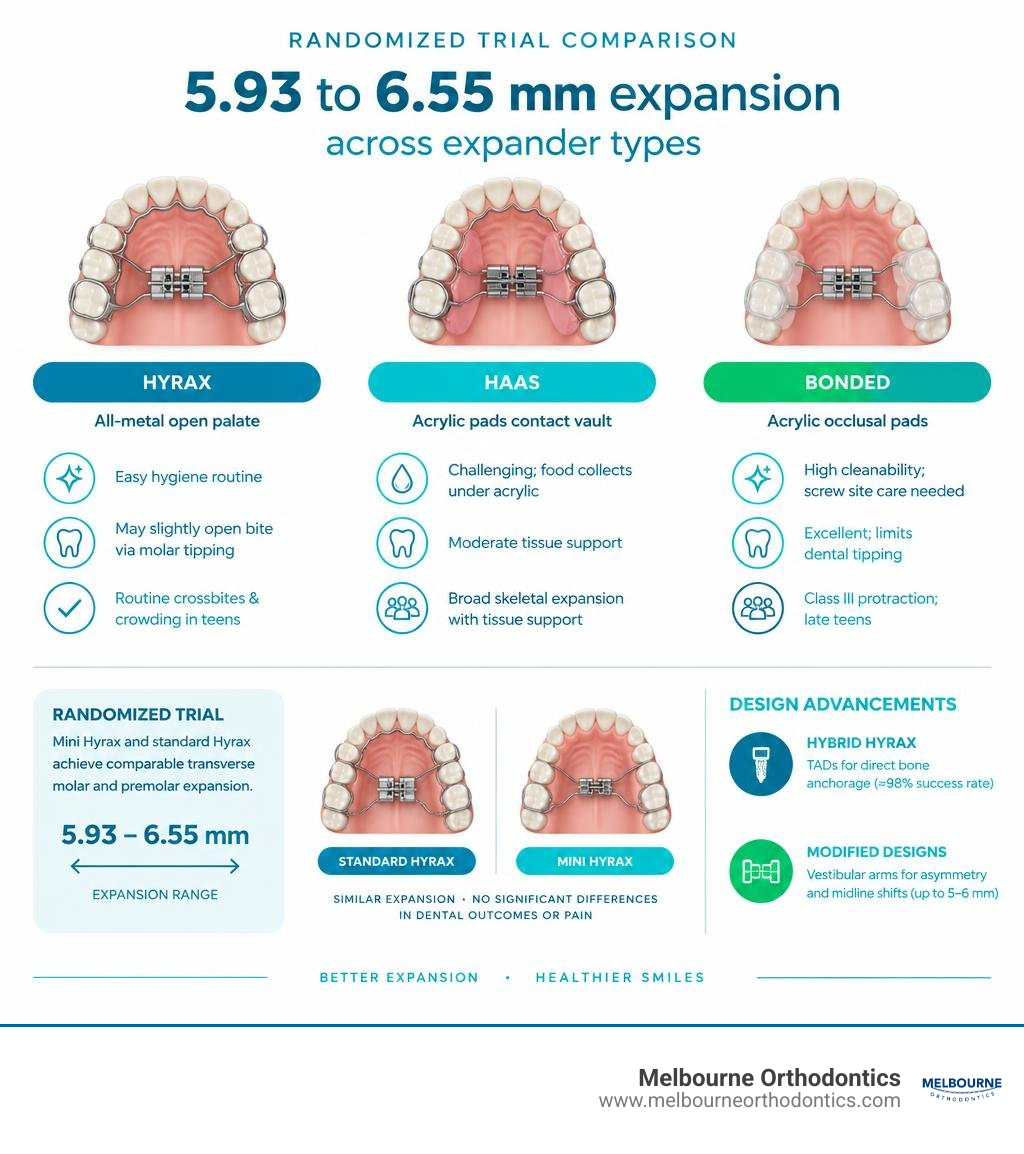
Modified designs can also feature vestibular arms to address asymmetric transverse discrepancies and midline shifts up to 5 mm to 6 mm.
For older adolescents with increasing skeletal resistance, the Hybrid Hyrax incorporates temporary skeletal anchorage devices (TADs). By placing two mini-implants in the anterior palate (which carry a clinical success rate near 98%), forces transmit directly into the palatal bone, minimizing unwanted dental tipping.
Clinical Effects: Dental Changes, Airway Impact, and Class III Treatment
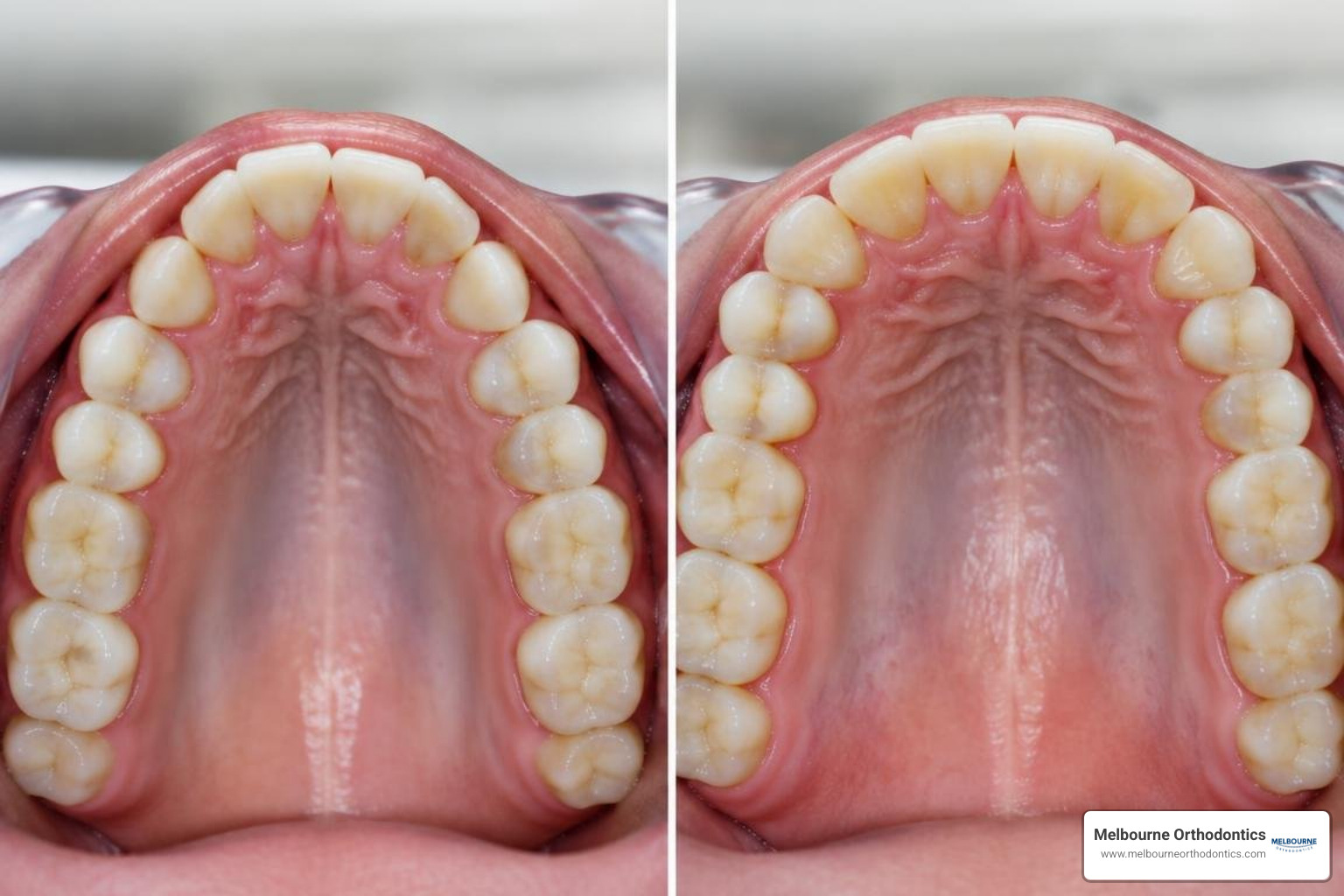
Rapid palatal expansion produces predictable dimensional changes across the dentofacial complex:
- Transverse Arch Width: Expansion reliably widens the maxilla by 5 mm to 7.5 mm across first permanent molars.
- Premolar and Molar Inclination: Tooth-borne expanders produce slight outward buccal tipping. Studies show premolar buccal inclination increases by approximately 9.25° to 12.17°, while molar buccal inclination shifts by 1.53° to 2.79°.
- Arch Length Gains: Every millimeter of transverse expansion generates roughly 0.7 mm of perimeter arch space, creating room for crowded permanent canines and incisors to erupt naturally.
Airway and Nasopharyngeal Volume Changes
Because the roof of the mouth forms the floor of the nasal cavity, expanding the palate influences the upper airway. In our clinical overview on palatal expander side effects on the nose, we explore how skeletal separation affects nasal volume.
Systematic reviews and CBCT imaging studies confirm that rapid palatal expansion with a Hyrax device significantly increases nasopharyngeal airway volume (Mean Difference = 0.69 cm³, p = 0.02). While overall nasal cavity volume changes can vary depending on individual anatomy, many adolescent patients report reduced nasal resistance and improved daytime breathing efficiency following treatment.
Facemask Therapy and Early Class III Correction
When addressing skeletal underbites, the Hyrax serves as an anchor for orthopedic protraction. Combining a Hyrax with facemask therapy allows orthodontists to loosen circummaxillary sutures and guide the upper jaw forward.
For advanced cases, the Hybrid Hyrax Distalizer—anchored by anterior palatal mini-implants—provides skeletal anchorage that prevents unwanted forward tipping of the upper incisors during protraction. Clinical reports highlight substantial skeletal improvements:
- SNA Angle: Increases by an average of 4.6° (e.g., from 81.8° to 86.4°), reflecting genuine forward skeletal movement of the maxilla.
- Wits Appraisal: Corrects by up to 6.9 mm (shifting from -5.2 mm to +1.7 mm), normalizing skeletal relationships between the upper and lower jaws.
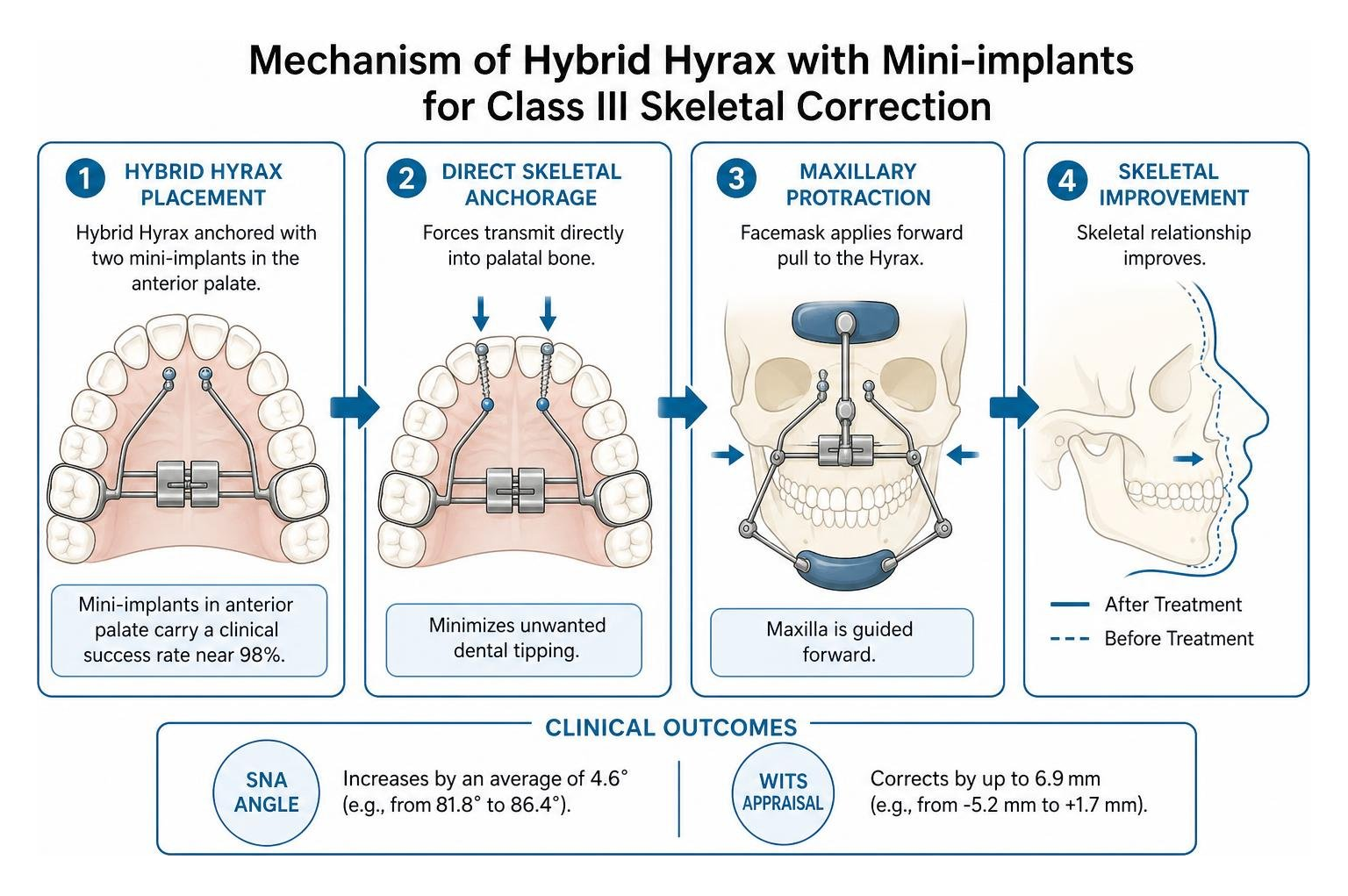
This skeletal approach is a proven tool when correcting underbites and crossbites with early orthodontic treatment.
Managing Treatment: Patient Comfort, Hygiene, and Long-Term Stability
Starting palatal expansion involves an initial adjustment period. When evaluating how bite alignment affects daily comfort, managing soreness and maintaining good habits helps treatment progress smoothly.
Patients typically report mild pressure across the bridge of the nose and roof of the mouth right after turns. Visual Analog Scale (VAS) pain tracking reveals that discomfort peaks in the first 24 to 48 hours and drops sharply between 48 and 72 hours. Oral Health-Related Quality of Life (OHIP-14) scores indicate that speech clarity and swallowing generally return to normal within 7 to 10 days.
Patient Care Note: For patients who also wear interarch elastics as part of their comprehensive bite correction, we recommend changing elastics at least once a day to ensure consistent corrective force.
Oral Hygiene, Complication Management, and Preventing Relapse
Because the Hyrax lacks palatal acrylic, cleaning around its metal bars is straightforward. We recommend:
- Water Flossers & Sulcus Brushes: Directing a gentle stream of water above the jackscrew flushes out food debris after meals.
- Antimicrobial Rinses: Warm salt water or alcohol-free mouthwashes keep the palatal tissues calm and healthy.
- Complication Prevention: If the screw feels tight or turns are missed, contact the office right away rather than forcing the key.
To prevent skeletal relapse, the expander must remain in place passively for at least 6 months after turning stops. This retention phase gives the stretched midpalatal suture time to reorganize, lay down new collagen, and mineralize into dense, stable bone—a core principle of interceptive orthodontics.
Frequently Asked Questions About Palatal Expanders
How does the Hyrax expander differ from the Mini Hyrax in pain and dental results?
Both appliances achieve identical dental and skeletal arch expansion (averaging 5.9 mm to 6.5 mm of transverse gain). Pain perception and OHIP-14 quality-of-life scores are clinically equivalent. However, while traditional Hyrax users experience a sharp drop in soreness between 48 and 72 hours, Mini Hyrax users often report a more gradual decline due to the smaller metal footprint on their palate.
Does palatal expansion hurt, and how long does soreness last?
Palatal expansion does not cause severe pain. Most patients feel a sense of pressure across the palate and cheeks for 2 to 5 minutes immediately following a turn. Mild soreness can be managed with standard over-the-counter pain relievers (such as ibuprofen or acetaminophen) during the first two to three days.
How long must a Hyrax expander stay in place after turning stops?
Even though active turns usually finish within three to six weeks, the expander often stays cemented in place for several months afterward. This passive retention phase gives new bone in the midpalatal suture time to harden, helping maintain the new width and reduce the risk of orthodontic relapse.
Conclusion
Correcting a narrow upper jaw during childhood or adolescence is one of the most effective steps you can take for long-term oral health, facial symmetry, and airway support. Whether your treatment involves an all-metal Hyrax, an acrylic-padded Haas, a bonded bite-plane appliance, or a mini-implant supported Hybrid expander, each device offers clear mechanical advantages tailored to specific anatomical needs.
At Melbourne Orthodontics, Dr. Chad Reddick and our team deliver personalized orthodontic care for growing smiles across Melbourne and Indian Harbour Beach, FL. Ready to learn which expander is right for your child? Schedule a custom orthodontic appliance consultation with us today!