Keep That Straight Smile: Your Guide to Dental Retainers After Braces
Dental Retainers After Braces Keep Your Smile in Place
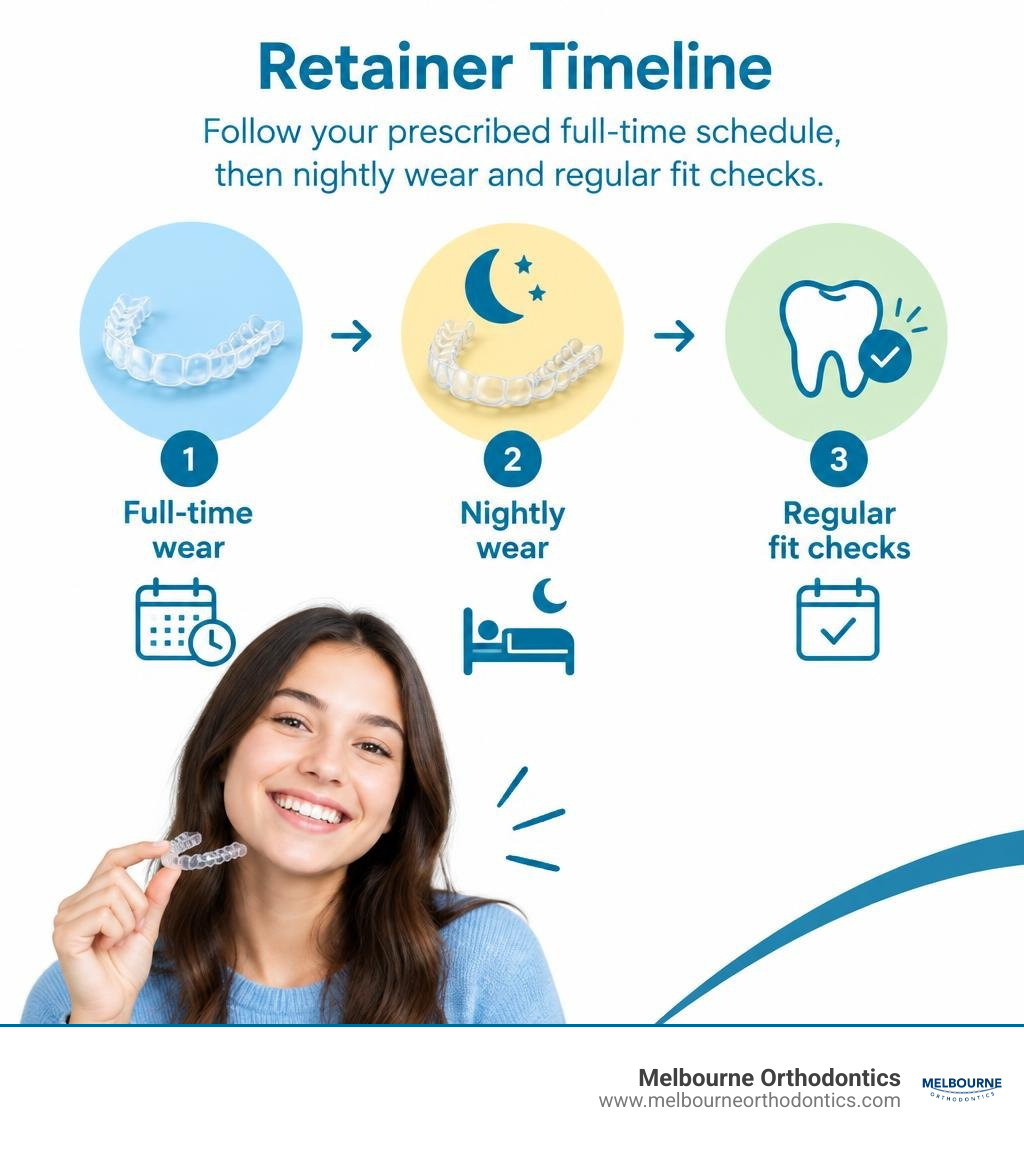
Dental retainers after braces help keep your teeth from shifting back. Your orthodontist may recommend a removable clear or Hawley retainer, a fixed wire, or both. Wear and care for yours as directed. Many people start with full-time wear and move to nightly wear, but the right schedule depends on their teeth.
Retention is a long-term part of orthodontic care. If your retainer is lost, broken, or no longer fits, contact your orthodontist rather than forcing it into place.
I’m Dr. Chad Reddick, the orthodontist at Melbourne Orthodontics in Melbourne, Florida. My specialized orthodontic training and experience caring for children, teens, and adults guide how I plan dental retainers after braces for each patient.
Glossary for dental retainers after braces:
Why Dental Retainers After Braces Are Essential for Your Smile
Finishing orthodontic treatment is a huge milestone, but removing your brackets or aligners is not the final step. Teeth need long-term support after braces to lock in your alignment. When braces exert pressure on your teeth, the surrounding alveolar bone softens to permit movement. Once the active appliances come off, the bone requires months to remineralize and solidify around the roots.
The periodontal ligament—a hammock of elastic collagen fibers supporting each tooth—stretches during treatment. These fibers act like tiny rubber bands that pull teeth toward their former positions if left unsupported. Understanding why retainers are necessary helps you safeguard your bite, smile symmetry, and overall dental health.
The Science of Orthodontic Relapse
Orthodontic relapse is the natural tendency of teeth to drift after movement. Research indicates that without retention, almost every orthodontic patient experiences some shifting. Clinical studies measure this using Little’s Irregularity Index, which tracks millimeter-level displacement in your front teeth.
Beyond elastic fibers, teeth experience natural physiological drift over time. As we age, our jaws slowly narrow, and natural chewing forces cause a forward movement called mesial drift. Retainers counteract both the immediate elastic recoil of soft tissue and the gradual biological forces that affect your smile over decades.
What Happens When You Skip Retention?
Teeth can begin shifting in as little as two weeks without consistent retainer wear. The results of neglecting your retainers often start with subtle changes:
- Minor rotations in the lower front teeth
- Small spaces opening where gaps were previously closed
- A tighter fit when you finally reinsert your appliance
- Relapse in bite alignment, leading to uneven chewing wear
If you skip wearing your appliance for several weeks, you may discover it no longer seats properly. Reviewing steps on troubleshooting when retainers aren’t worn will help you take action before minor shifting turns into significant relapse requiring active re-treatment.
Types of Retainers: Finding the Right Match for Your Teeth
Every smile is unique, which is why we evaluate different retainer options to suit individual bites, daily routines, and relapse risks. Orthodontic retention appliances fall into two primary categories: removable retainers and fixed bonded retainers. Many patients benefit from a hybrid approach, combining a fixed retainer on the lower front teeth with a clear removable appliance on the upper arch.
Clear Plastic Retainers (Essix and Vivera)
Clear removable retainers are crafted from thin, medical-grade thermoplastic materials (such as polyurethane or polypropylene), typically measuring about 0.76 mm in thickness. Using high-precision 3D digital impressions, these appliances fit securely over your entire dental arch.
Our detailed guide to clear plastic retainers covers how their virtually invisible profile makes them a popular choice for teens and adults. Because they encapsulate every tooth surface, clear retainers hold individual rotations and tooth heights with exceptional precision while remaining discreet during everyday conversations.
Hawley Retainers
The Hawley retainer is the classic orthodontic retention appliance. It consists of a durable, custom-molded acrylic baseplate that rests against the roof of the mouth or along the inside of the lower teeth, connected to a sturdy stainless steel labial bow wire.
Hawley retainers offer notable advantages:
- Durability: The acrylic and metal construction is resilient and can last for many years with basic care.
- Adjustability: We can gently adjust the metal wire loops to close minor spaces or fine-tune alignment.
- Natural Bite Settling: Because the plastic baseplate does not cover the chewing surfaces of your back teeth, your upper and lower molars can settle together naturally into your ideal bite.
Fixed Bonded Retainers
A fixed bonded retainer features a custom-contoured multistrand stainless steel wire attached to the back (lingual) surfaces of the front four to six teeth using dental composite adhesive.
Because it stays attached 24/7, a bonded retainer provides compliance-free retention. It is especially beneficial for the lower front teeth, which are biologically the most susceptible to post-treatment crowding and late mandibular shifting. Many patients keep fixed retainers in place for years or even indefinitely.
Comparing Removable and Fixed Dental Retainers After Braces
A comprehensive 2022 Cochrane systematic review evaluated retention strategies across 47 studies and 4,377 participants. The findings highlight clear trade-offs between appliance types:
| Feature | Clear Plastic (Removable) | Hawley Wire (Removable) | Fixed Bonded Wire |
|---|---|---|---|
| Aesthetic Visibility | Virtually invisible | Noticeable front metal wire | Completely hidden behind teeth |
| Durability & Longevity | Moderate; susceptible to wear | Very high; sturdy acrylic/metal | High; stays in place for years |
| Gum & Periodontal Health | Easier brushing; reduced gingivitis risk | Easy brushing; removable design | Requires floss threaders / water flossers |
| Compliance Requirement | High (patient must wear daily) | High (patient must wear daily) | None (bonded in place 24/7) |
| Little’s Irregularity Index Impact | Excellent stability with consistent use | Comparable stability to clear retainers | Slight edge in lower arch stability |
| Failure / Breakage Risk | Higher risk of cracking or wear | Lower risk of appliance failure | Occasional debonding of composite glue |
The research shows that while fixed retainers offer slightly lower relapse measurements on the lower arch, clear removable retainers provide excellent periodontal benefits because patients can brush and floss their natural teeth without obstruction.
Wear Schedules and Daily Lifestyle
Maintaining your newly straightened teeth requires consistency. Learning the essential facts about wearing a retainer will help you build habits that protect your smile investment.
How Long Do You Need to Wear Dental Retainers After Braces?
Most patients follow a structured wear schedule tailored to their original malocclusion:
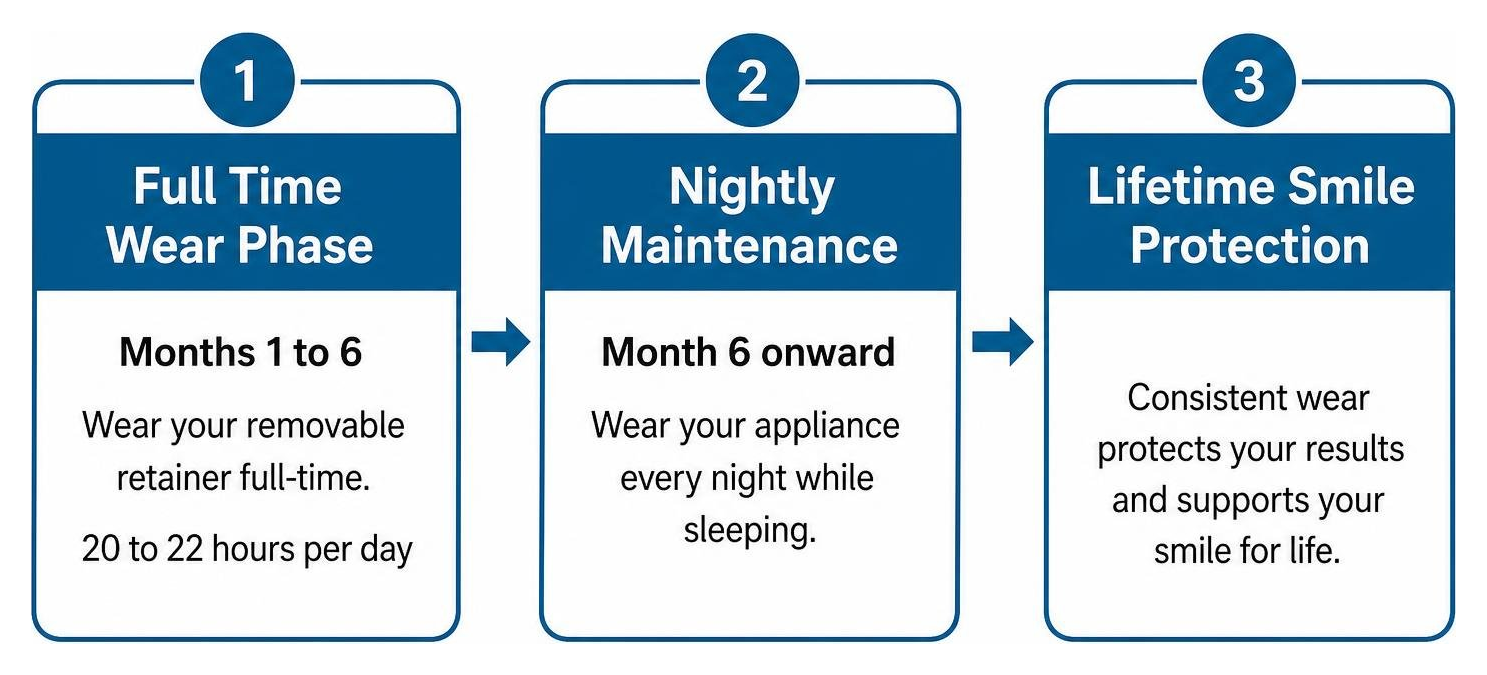
- Initial Stabilization Phase (Months 1 to 6): Wear your removable retainer full-time for 20 to 22 hours per day, removing it only to eat, drink non-water beverages, and brush your teeth.
- Nighttime Maintenance Phase (Month 6 onward): Once bone remodeling stabilizes, you can transition to wearing your appliance every night while sleeping.
- Lifelong Smile Security: Teeth remain dynamic throughout life. Wearing your retainer every night indefinitely ensures your teeth stay in their ideal positions permanently.
Eating, Speaking, and Daily Habits
Adapting to life with your appliance takes only a few days:
- Speaking Clearly: You may notice a slight lisp or extra saliva during the first 48 hours. Reading aloud or practicing conversations quickly trains your tongue to adapt.
- Eating and Drinking: Always remove removable appliances before eating meals or snacks. Chewing with retainers in place can crack the plastic or bend the wire. Remove them when drinking hot beverages to avoid heat distortion.
Retainer Care, Hygiene, and Troubleshooting
Practicing must-do retainer care and maintenance ensures your appliance stays hygienic, odor-free, and structurally sound.
Best Practices for Cleaning and Maintenance
Incorporate these proven retainer cleaning tips into your morning and evening routines:
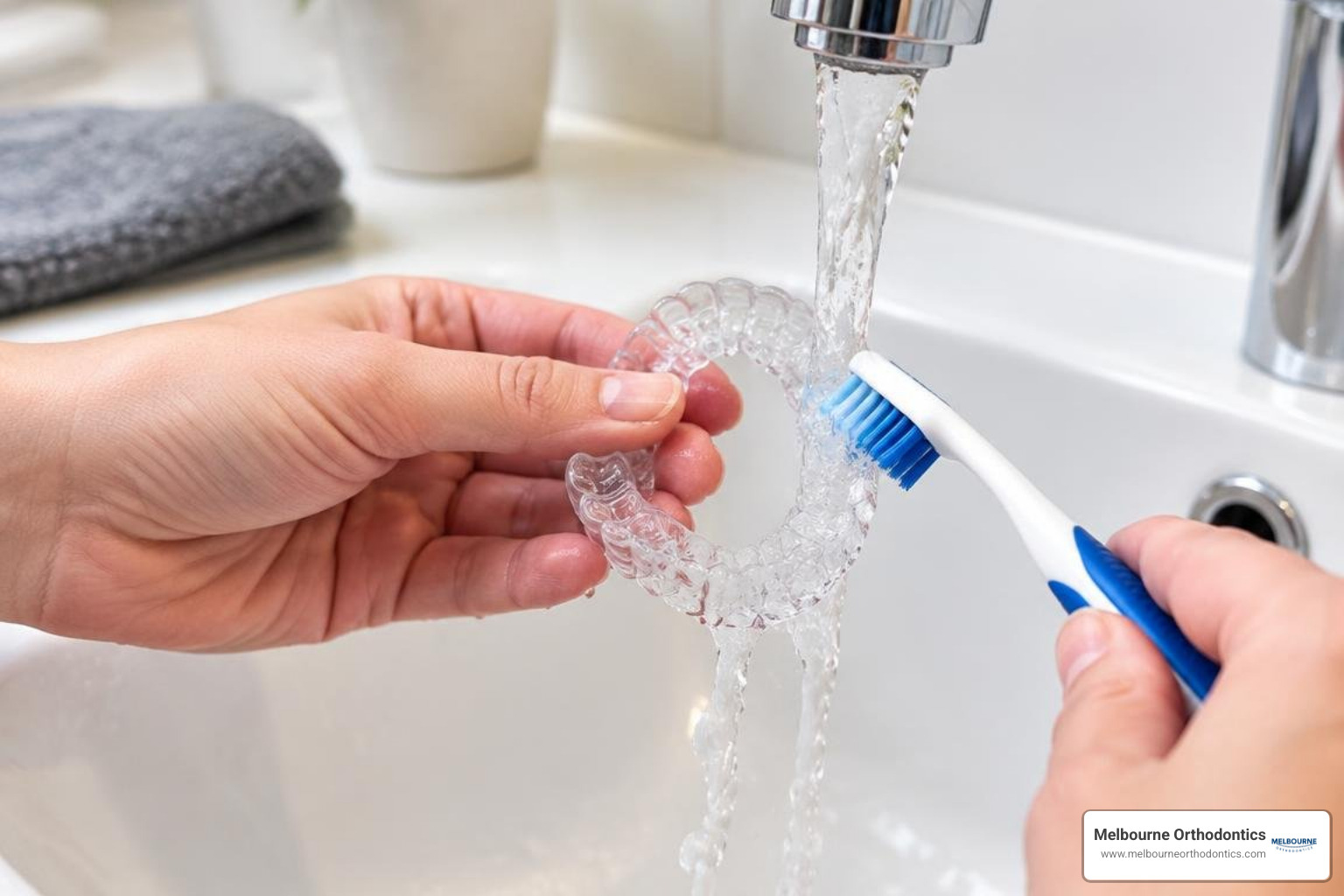
- Daily Brushing: Gently clean your removable retainer daily using a soft-bristled toothbrush and lukewarm water. Avoid regular abrasive toothpastes, which can create microscopic scratches that harbor bacteria.
- Weekly Cleansing Soaks: Soak your appliance once or twice a week in a specialized orthodontic effervescent cleanser, mild antibacterial soap, or white distilled vinegar to dissolve mineral buildup.
- Fixed Retainer Hygiene: For bonded lingual wires, use a floss threader, orthodontic flosser, or water flosser daily to remove plaque under the wire and along the gumline.
- Protective Storage: When your retainer is not in your mouth, store it in its protective plastic case. Keep it away from high heat, direct sunlight, and pets.
Handling Lost, Broken, or Ill-Fitting Appliances
Accidents happen. If your appliance is damaged or misplaced, knowing the appropriate remedies for lost or damaged retainers is critical.
If your retainer cracks or a bonded wire lifts, review our guidance on repairing broken retainers and contact our office right away. Never attempt to force a warped or damaged appliance over your teeth. If you are traveling or misplaced your case, exploring emergency retainer replacement solutions will help keep tooth movement to a minimum.
For appliances that suddenly feel uncomfortable, understanding why retainers lose their fit helps determine whether slight tooth shifting has occurred or the appliance itself has warped.
Retainer Costs and Insurance Coverage
Your initial set of retainers is almost always included as part of your comprehensive orthodontic treatment plan. For long-term care, replacement retainers may incur a separate fee for digital scanning and custom laboratory fabrication.
Many dental insurance plans with orthodontic benefits cover a portion of retainer replacements, and flexible spending accounts (FSA) or health savings accounts (HSA) can often be applied toward replacement appliances.
Frequently Asked Questions About Retainers
Can dental retainers straighten teeth if they have already shifted?
Retainers are designed to maintain alignment, not deliver the continuous active force required to move teeth significantly. If you experience very minor shifting (less than 1 mm), wearing your retainer consistently may help nudge teeth back into position. However, if teeth have noticeably rotated or overlapped, an orthodontic re-evaluation is necessary to determine if clear aligners or brief touch-up treatment is appropriate.
Why does my removable retainer smell, and how do I clean it?
Retainers sit in a warm, moist oral environment where plaque, saliva proteins, and bacteria accumulate. If not cleaned thoroughly every day, this biofilm hardens into tartar and causes unpleasant odors. Clean your appliance with lukewarm water, a soft brush, and dedicated retainer cleansing tablets to keep it fresh and clear.
Are there any risks or side effects associated with wearing retainers?
Retainers are safe and standard in orthodontic care. Mild side effects may include temporary tooth tightness when switching wear schedules, minor gum irritation, or temporary speech adjustments. With bonded retainers, poor oral hygiene can lead to localized tartar buildup, which is why regular dental cleanings and diligent flossing around the wire are essential.
Conclusion
At Melbourne Orthodontics, Dr. Chad Reddick and our team are committed to providing personalized, high-quality orthodontic care for families throughout Melbourne and Indian Harbour Beach, Florida.
Preserving your straight smile is a lifelong partnership. Whether you need a replacement appliance, a fit check, or guidance on the ideal retention system for your lifestyle, explore our custom orthodontic retainer options or contact our office today to schedule your visit!