The Ultimate Guide to Clear Plastic Retainers
Why a Clear Essix Retainer Matters After Braces
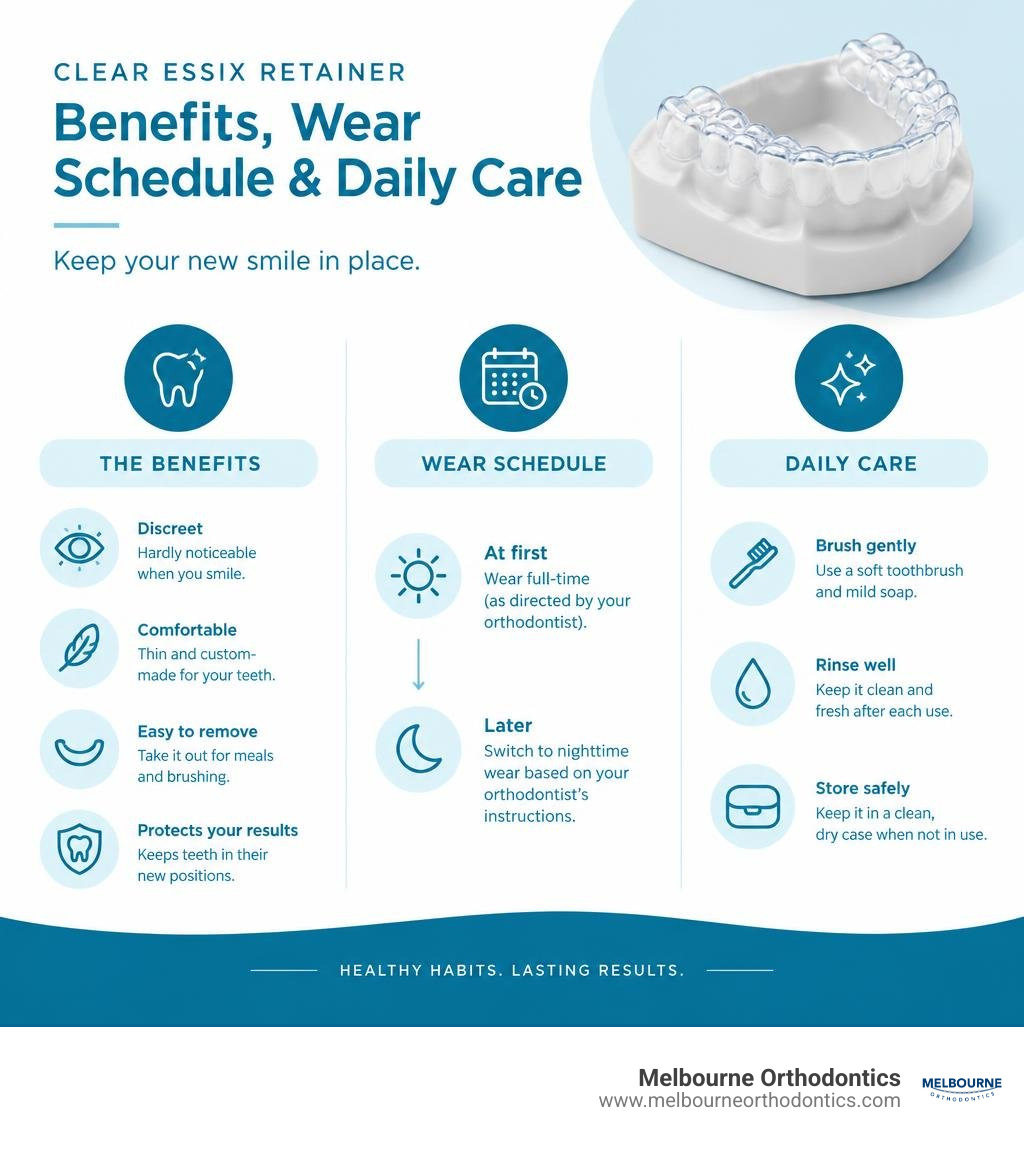
A clear Essix retainer is a thin, custom-made plastic tray that fits over your teeth after braces or clear aligners. Its job is simple: hold teeth in their new positions while the surrounding bone and tissues stabilize. Most patients wear it full-time at first, then transition to nighttime wear based on their orthodontist’s instructions.
Clear retainers are popular because they are discreet, comfortable, and easy to remove for meals and brushing. But they also need consistent wear and daily cleaning. Without retention, teeth can gradually shift back toward their old positions.
At Melbourne Orthodontics, patients are recommended to change their interarch elastics at least once a day when elastics are part of their orthodontic plan. Retainer instructions are separate and should always follow the schedule your orthodontist provides.
I am Dr. Chad Reddick, an orthodontist at Melbourne Orthodontics in Melbourne and Indian Harbour Beach, Florida. I help children, teens, and adults choose and care for appliances, including a clear Essix retainer, that protect their orthodontic results for the long term.
What Is a Clear Essix Retainer and How Does It Work?
When your active orthodontic treatment wraps up, your teeth are finally in their ideal positions, but the underlying anatomy requires time to catch up. After brackets or attachments are removed, the surrounding periodontal ligaments and alveolar bone undergo a dynamic phase of remodeling. Without continuous support, elastic memory in the gum tissues naturally pulls teeth back toward their original positions—a process known as orthodontic relapse.
An Essix appliance acts as a precise structural scaffold. Fabricated by thermoforming medical-grade plastic over an exact dental model of your corrected bite, the appliance covers the entire dental arch. By enveloping the facial, lingual, and biting surfaces of every tooth, it locks your alignment into place while new bone matrix solidifies around the roots. Integrating this appliance into your daily routine is an essential part of caring for teeth after braces.
Materials and Design of the Clear Essix Retainer
Essix appliances are engineered from advanced, BPA-free copolyester or polyurethane thermoplastic sheets. These medical-grade polymers are carefully calibrated—typically at a thickness of 1.0 mm—to deliver a balance of rigid tooth retention and comfortable daily wear.
The fabrication relies on high-precision vacuum forming or positive-pressure thermoforming over an accurate 3D stone cast or digitally printed model. Once trimmed and polished along the scalloped gum line, the tray produces a snug “snap fit.” While active aligners exert directional pressure to move teeth, retainers provide passive full-coverage holding force. For patients comparing treatment steps, understanding how retainers and aligners differ post-treatment helps clarify why a rigid holding appliance is necessary once tooth movement ends.
Using a Clear Essix Retainer with a Pontic for Missing Teeth
Beyond stabilizing straightened arches, clear retainers offer versatile restorative solutions. If a patient is missing a tooth due to congenital absence, trauma, or a planned extraction, an artificial prosthetic tooth (known as a pontic) can be built directly into the thermoplastic tray.

This pontic-bearing appliance serves as a discreet aesthetic placeholder. It preserves anterior spacing, maintains arch symmetry, and keeps neighboring teeth from tipping into the gap while you heal or wait for a definitive restoration, such as a dental bridge or dental implant.
Benefits, Drawbacks, and Retainer Comparisons
Choosing the right retention system involves weighing aesthetics, durability, and lifestyle habits. Examining the different types of retainers helps you select the best fit for your smile.
| Feature | Clear Essix Retainer | Traditional Hawley Retainer | Fixed Bonded Retainer |
|---|---|---|---|
| Material | Clear 1.0 mm thermoplastic polymer | Acrylic base with stainless steel wire | Braided or solid wire bonded with composite |
| Visibility | Virtually invisible | Visible metal labial bow wire | Completely hidden behind front teeth |
| Removability | Yes (removable for meals and cleaning) | Yes (removable for meals and cleaning) | No (permanently bonded to enamel) |
| Bite Settling | Holds bite firmly; prevents vertical settling | Allows natural posterior occlusal settling | Allows natural posterior settling |
| Durability | Moderate (typically replaced every 1–3 years) | High (can last 5–10+ years with adjustments) | High, but composite bonding can debond |
| Hygiene | Simple to brush appliance outside mouth | Simple to brush appliance outside mouth | Requires floss threaders or interdental brushes |
Aesthetic Invisibility and Comfort Advantages
The most celebrated feature of a clear Essix appliance is its subtle appearance. Because the transparent plastic fits snugly against the contours of your enamel, it is virtually undetectable during normal conversation and social interactions.
Additionally, Essix retainers are smooth along the cheeks and tongue, lacking the bulky acrylic palate of a Hawley retainer or the protruding clasps that can irritate sensitive oral tissues. Most patients adapt their speech within two to three days, enjoying confident smile protection without noticeable metal wires.
Potential Drawbacks and Oral Health Considerations
While clear retainers excel in aesthetics, they require diligent oral hygiene. Because the thermoplastic material encases the teeth, it can trap saliva, plaque, and food particles against the enamel if not cleaned properly. Studies in orthodontic literature note that poor hygiene with clear retainers can elevate the risk of localized plaque buildup and marginal gingival inflammation. Understanding the risks of neglecting your retainers underscores why keeping your appliance clean is vital.
Furthermore, patients who clench or grind their teeth (bruxism) can wear through or crack the 1.0 mm plastic over time, making routine wear checks an important part of appliance maintenance.
Wear Schedules, Lifespan, and Proper Daily Care
Consistency is the foundation of long-term orthodontic stability. Learning essential guidelines for wearing a retainer will help you protect the investment you made in your smile.
Recommended Daily Wear and Replacement Timeline
Following guidance aligned with the American Dental Association, most patients wear their clear retainers full-time (20 to 22 hours per day, removing them only for eating and oral hygiene) for the initial 2 to 3 months post-treatment. Once the periodontal ligament fibers have matured, patients generally transition to nighttime-only wear.
Because bone remodeling is a lifelong process, wearing a retainer at night is a long-term commitment to preserve alignment. To answer whether you need to wear retainers forever, nighttime wear for life is the safest way to prevent natural, age-related tooth movement. Under proper care, an Essix appliance typically has an operational lifespan of 1 to 3 years before material fatigue, micro-wear, or minor warping warrants fabrication of a fresh set.
Cleaning, Storage, and Maintenance Best Practices
To keep your retainer crystal clear and free of odor-causing bacteria, establish a daily hygiene routine with these essential best practices:
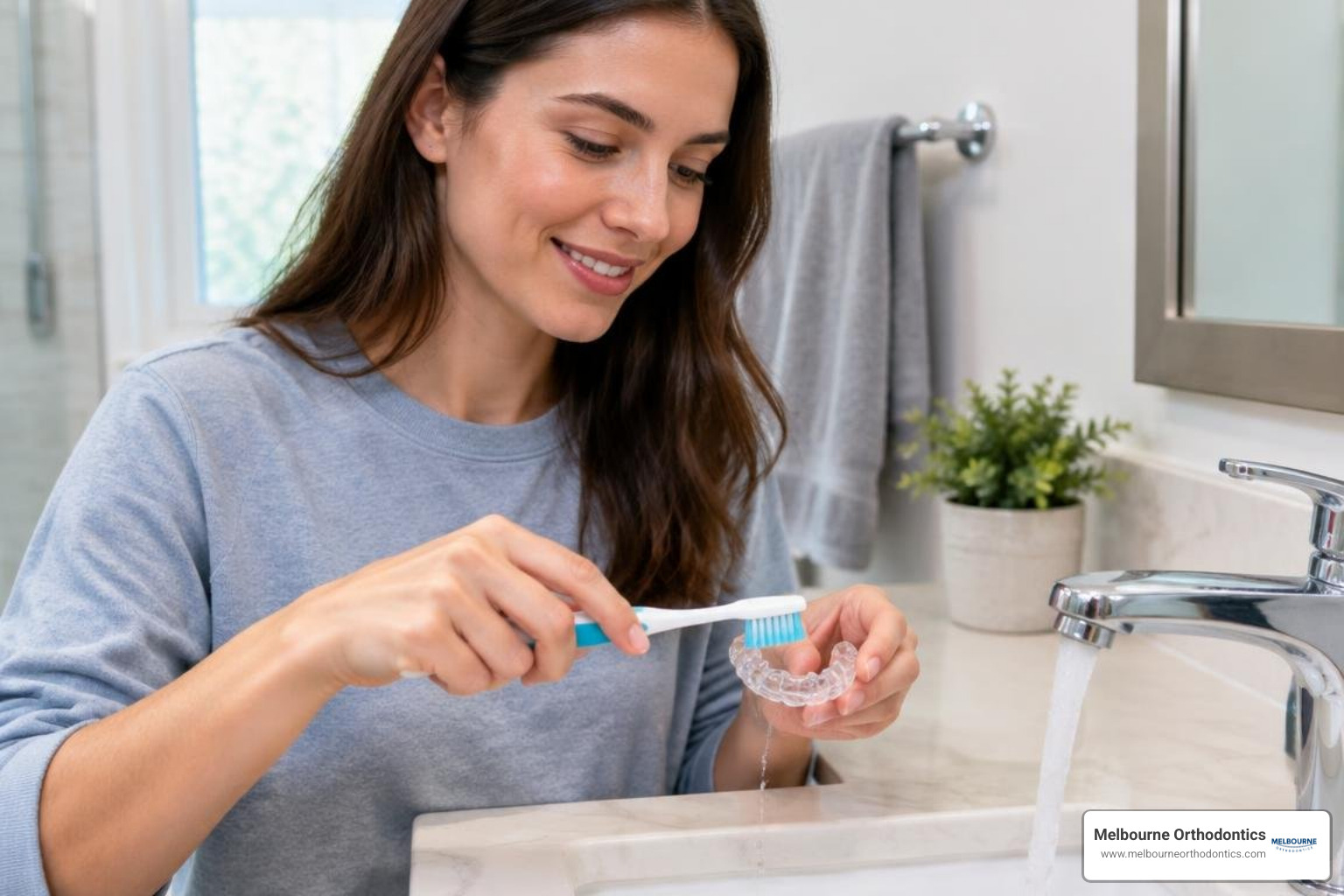
- Rinse Immediately: Rinse your retainer under cool or lukewarm tap water every time you take it out of your mouth.
- Brush Gently: Clean the inside and outside surfaces daily using a soft-bristled toothbrush and mild, clear liquid soap.
- Avoid Hot Water: Never expose your appliance to boiling water, hot car dashboards, or dishwashers; heat causes immediate thermal warping.
- Skip Abrasive Pastes: Avoid standard whitening or abrasive toothpastes, which can scratch the polymer surface and make it look cloudy.
- Store in a Case: Whenever your retainer is not in your mouth, place it in a ventilated protective case to prevent accidental loss or pet damage.
For more detailed hygiene steps, review our top tips for cleaning retainers.
Troubleshooting Common Issues and Fabrication Costs
Even with attentive daily care, appliances can wear out, crack, or become misplaced over time.
Managing Cracking, Warping, and Hygiene Buildup
If white mineral film or stubborn plaque deposits accumulate on your retainer, soak the appliance with a specialized retainer-cleansing tablet or pure white distilled vinegar.
If you notice a hairline fracture, rough edge, or loose fit, check our guide on what to do if your retainer breaks and contact our team promptly. Wearing a cracked tray can permit subtle tooth movement. If your tray feels unusually tight after a short break, understanding why your retainer is not fitting can help you determine whether relapse has started. In cases of loss or structural failure, follow the recommended steps for lost or damaged retainers to obtain a replacement before your alignment changes.
Cost Breakdown: In-Office Care and Replacement Options
Investing in professional orthodontic retention ensures precision, safety, and durability. When you receive custom appliances through an orthodontic clinic, your trays are fabricated from high-accuracy digital intraoral scans or specialized dental models, ensuring exact margins that protect your gingiva and maintain your occlusion.
Clinical supervision guarantees that tooth fit, bite relationships, and arch stability are verified directly by your orthodontist. Many dental insurance policies offer orthodontic benefits that contribute toward retention appliances, and having digital scans archived makes ordering replacement sets efficient and straightforward.
Frequently Asked Questions About Clear Essix Retainers
How long does an Essix retainer typically last before replacement?
On average, a clear retainer lasts between 1 and 3 years. Its longevity depends on daily care habits, cleaning methods, and whether you exhibit nighttime clenching or grinding habits that accelerate polymer wear.
Can you eat or drink while wearing a clear retainer?
You should only drink plain, cool water while wearing your clear retainer. Remove the appliance prior to eating meals, snacks, or drinking colored, sugary, or hot beverages. Chewing with the retainer in place will crack the thin plastic, while dark liquids can easily stain the tray and trap sugars against your teeth.
What should you do if your clear retainer feels extremely tight?
A tight retainer typically indicates that your teeth have begun minor shifting, often after skipping several nights of wear. Try wearing the appliance consistently for 24 to 48 hours to see if your teeth gently realign. If the appliance causes sharp pain or will not seat completely over your teeth, schedule an appointment with your orthodontist for a professional fit check.
Conclusion
A clear Essix appliance provides an effective, discreet, and comfortable way to protect your straight teeth once braces or aligners come off. By sticking to your prescribed wear routine and keeping up with daily cleaning, you can ensure your smile stays healthy and stable for decades to come.
At Melbourne Orthodontics, Dr. Chad Reddick and our dedicated clinical team provide comprehensive retention options for patients throughout Melbourne, Florida, and Indian Harbour Beach. Whether you need an initial set of retainers, a replacement, or advice on maintaining your alignment, explore our custom retainers or schedule an appointment with our office today.