A Simple Daily Guide on How to Clean Dental Retainers
How to Clean Dental Retainers Without Damaging Them
Knowing how to clean dental retainers starts with a daily rinse and gentle brush. Rinse a removable retainer with cool or lukewarm water, then brush it with a soft toothbrush and a little mild liquid soap. Rinse it well before wearing it again. For a fixed retainer, brush around the wire and floss beneath it each day. A retainer-safe soak can help with buildup about once a week.
Skip hot water and bleach. They can damage a removable retainer or affect its fit. Keep it in a clean case when you are not wearing it.
I’m Dr. Chad Reddick, the orthodontist at Melbourne Orthodontics. My specialized orthodontic training and work with retainer patients inform this guide on how to clean dental retainers and protect their fit.
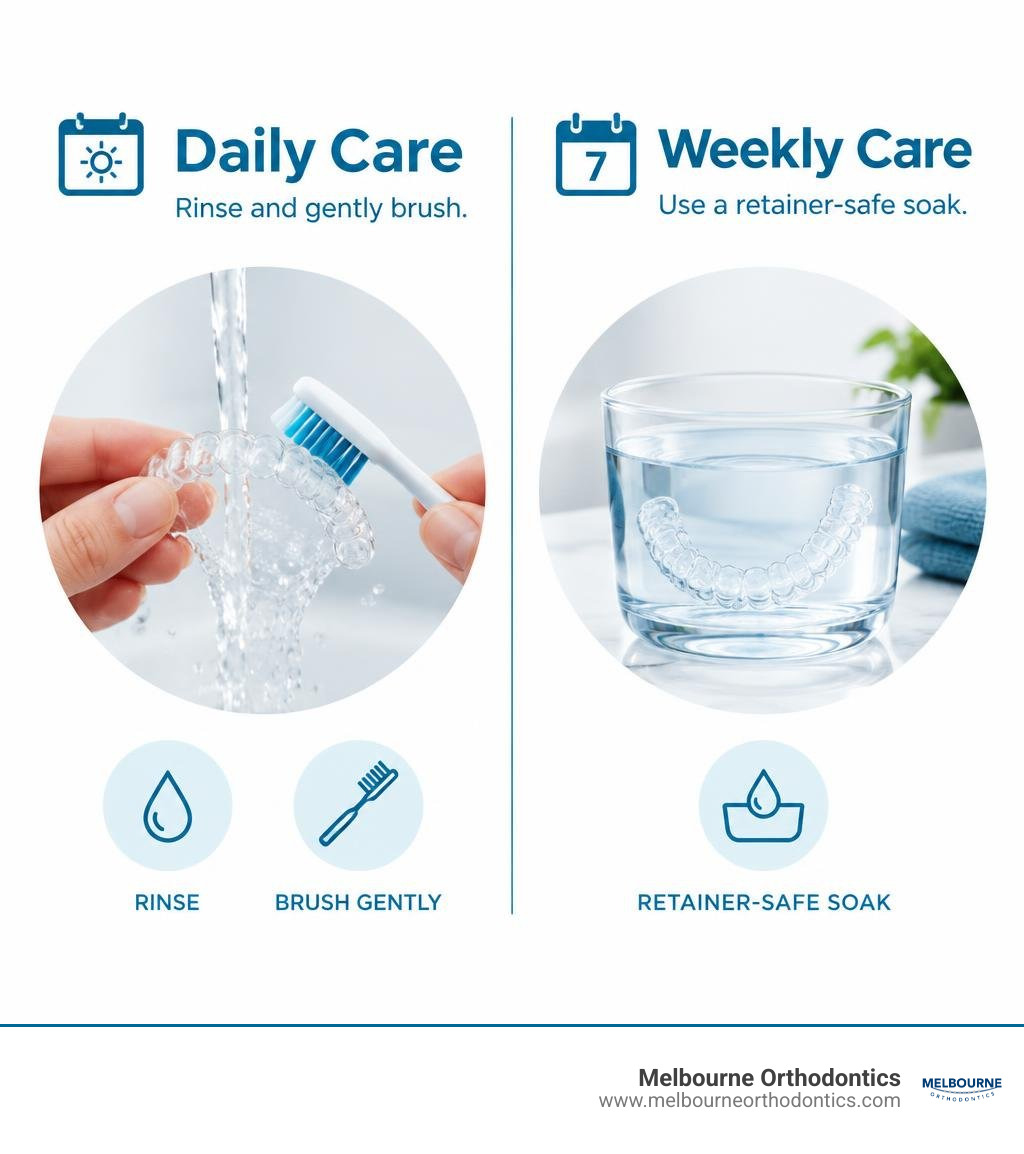
Whether you are caring for dental retainers after braces, maintaining a clear essix retainer, or planning an Essix retainer replacement, keeping your appliance sanitary is essential.
Understanding Retainer Types and Design Differences
Every retainer works to preserve your orthodontic alignment, but different materials react uniquely to cleaning agents, temperature, and wear. Approximately 7 million people across the United States wear a dental-protection device like a retainer or mouthguard. With so many smiles relying on these oral appliances, maintaining proper appliance hygiene is essential.
When you wear any oral device, bacteria, saliva proteins, and mineral deposits quickly accumulate on the surface. Without regular attention, this layer solidifies into plaque and tartar, leading to unpleasant odors, visible staining, and oral health complications. To keep your appliance fresh, you must first understand the structural specifics of the design you wear.
| Retainer Type | Primary Materials | Key Cleaning Considerations | Common Vulnerabilities |
|---|---|---|---|
| Essix / Clear Retainers | Transparent, BPA-free thermoformed plastic | Requires gentle liquid soap or specialized soaking minerals; avoid heat | Warping from hot water; scratching from abrasive brushes or pastes |
| Hawley Retainers | Molded acrylic plate with stainless steel wire | Acrylic can be gently brushed; safe for effervescent tablets | Acrylic discoloration; bent wires if scrubbed forcefully |
| Fixed / Bonded Retainers | Stainless steel wire bonded with composite resin | Cleaned directly in the mouth using floss threaders and interdental brushes | Calculus buildup behind lower teeth; debonding if picked with hard tools |
Removable Clear Plastic and Hawley Retainers
Removable options generally fall into two categories: clear aligner-style appliances (such as Essix retainers) and traditional Hawley retainers. Clear appliances fit snugly over the entire arch, making them virtually invisible. However, their smooth plastic surface is sensitive to heat and microscopic abrasions. For an in-depth breakdown of these appliances, take a look at The Ultimate Guide to Clear Plastic Retainers.
Hawley retainers feature a durable acrylic body shaped to the palate or tongue line, held in place with an adjustable metal bow wire. While the acrylic is sturdier than thin clear plastic, the metal wire can bend under heavy pressure, altering how your teeth sit. Brushing both styles aggressively with stiff bristles or grainy pastes creates micro-scratches where odor-causing bacteria thrive.
Fixed Bonded Lingual Retainers
Fixed lingual retainers consist of a custom-bent wire permanently bonded to the inner (lingual) surface of your front teeth—most commonly the lower arch—using specialized composite cement. Because they remain in your mouth full-time, Dental Retainers of this style present unique hygiene hurdles.
The lower anterior teeth sit right beside the major salivary glands under your tongue. This anatomical positioning means mineral-rich saliva constantly bathes the wire, leading to rapid calculus (tartar) accumulation if not cleaned daily. Since you cannot take a bonded wire out to soak it, your cleaning approach must rely on precise in-mouth mechanical hygiene.
Step-by-Step Daily Routine on How to Clean Dental Retainers
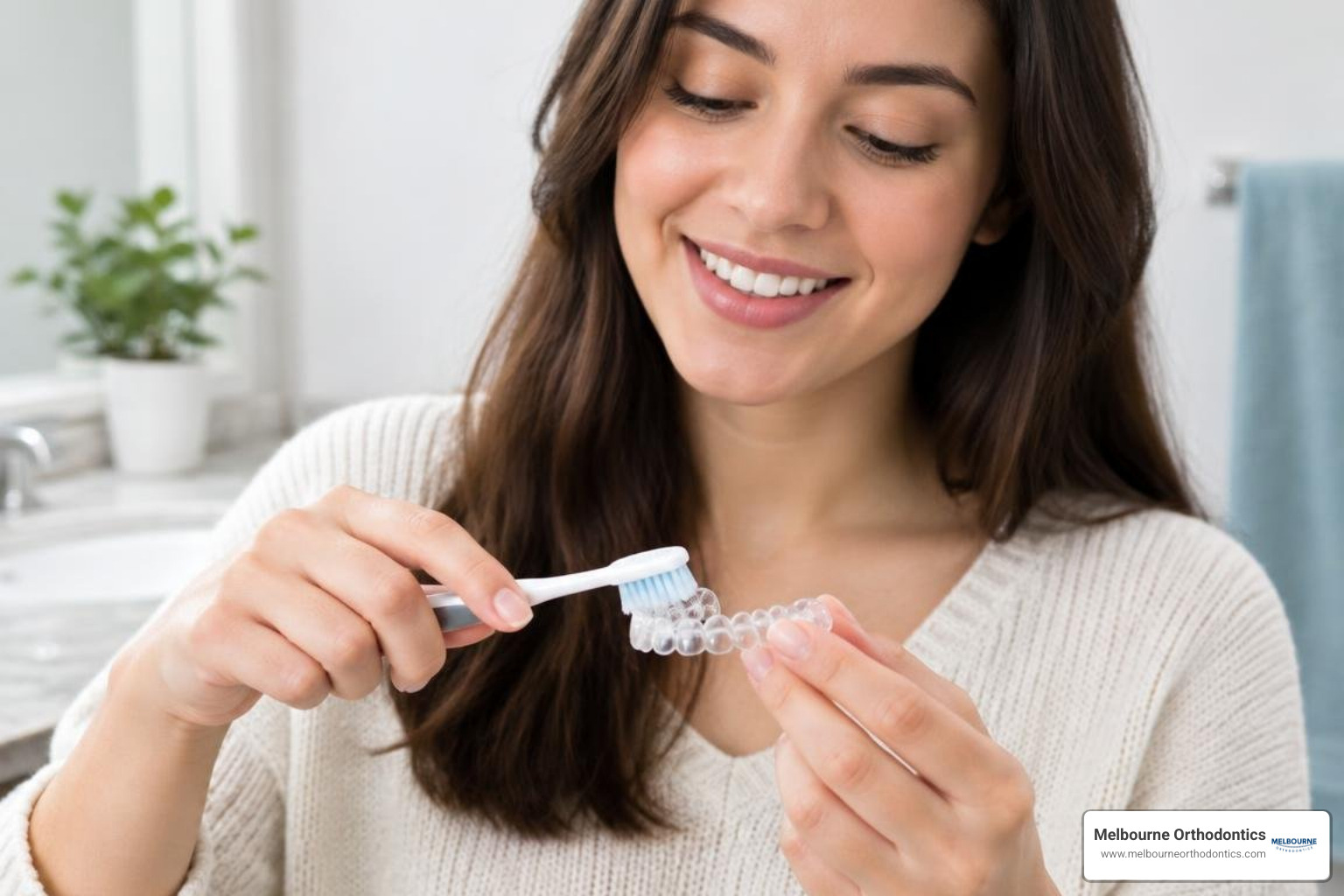
A predictable daily hygiene routine prevents the buildup of dangerous bacterial biofilms. Practicing good habits when Cleaning Your Retainers ensures they remain clear, clean, and structurally sound for years.
How to Clean Dental Retainers Made of Clear Plastic or Acrylic
For removable devices, follow this step-by-step daily process every morning and evening:
- Rinse Immediately Upon Removal: As soon as you take your retainer out of your mouth, rinse it thoroughly under cool or lukewarm running water. Rinsing while the saliva is still wet prevents proteins and plaque from drying and hardening onto the material.
- Apply a Mild Cleanser: Place a pea-sized drop of clear, antibacterial liquid hand soap or mild liquid dish soap onto the appliance.
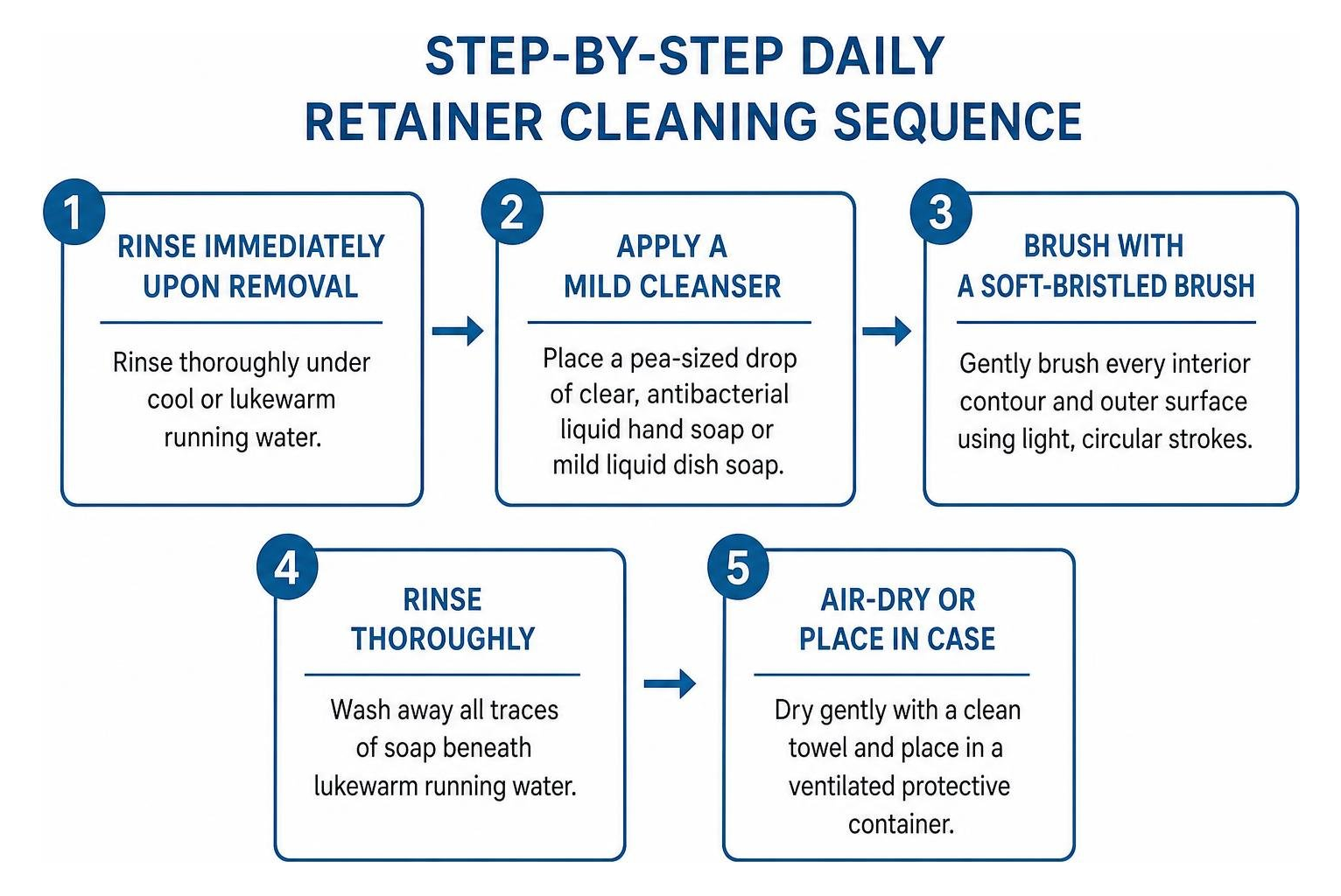
- Brush with a Soft-Bristled Brush: Using a soft-bristled toothbrush dedicated solely to your retainer, gently brush every interior contour and outer surface. Use light, circular strokes to lift residue without creating micro-scratches. Explore our recommended Tips For Cleaning Your Retainers to make sure your technique remains safe and effective.
- Rinse Thoroughly: Wash away all traces of soap beneath lukewarm running water.
- Air-Dry or Place in Case: If you are not putting the appliance immediately back into your mouth, dry it gently with a clean towel and place it in a ventilated protective container.
How to Clean Dental Retainers with Bonded Lingual Wires
Fixed retainers require targeted mechanical attention every single day to stop plaque from turning into hard calculus. Daily Retainer Maintenance around bonded wires protects both the appliance and your gum tissues:
- Angle Your Toothbrush: Position your soft-bristled toothbrush at a 45-degree angle against the gum line on the inner side of your teeth. Use gentle, vibrating motions along the top and underside of the wire.
- Use a Floss Threader or Orthodontic Flosser: Thread dental floss through the gap between your teeth just under the bonded wire. Gently work the floss up and down the sides of each tooth to remove trapped plaque before pulling the floss out.
- Incorporate Interdental Brushes: Slide a tiny, flexible interdental brush between your teeth below the wire to sweep away food debris from the composite bonding pads.
- Use a Water Flosser: A pulsating stream of water clears away loose particles around the wire, providing extra protection against gum inflammation.
Safe Methods for Deep Cleaning and Sanitizing Retainers
Even with daily brushing, microscopic mineral deposits and stubborn bacteria can settle into your appliance over time. Establishing a structured schedule for Retainer Care that includes a regular deep clean will keep your appliance spotless and completely odor-free.
Gentle Household Soaks
You can safely deep-clean your removable appliance at home using basic household staples:
- Baking Soda Paste and Soak: Sodium bicarbonate is an excellent, non-abrasive natural deodorizer. Mix equal parts baking soda and lukewarm water to form a smooth paste, brush it gently onto the retainer, let it sit for 5 to 10 minutes, and rinse thoroughly. Alternatively, dissolve 1 tablespoon of baking soda in a cup of water and soak the appliance for 15 minutes.
- White Vinegar Soak: To dissolve hard, chalky calcium deposits (tartar), distilled white vinegar can be used. Let your appliance soak for 15 to 20 minutes to break down mineral bonds, then brush lightly and rinse thoroughly to wash away the vinegar taste.
- Hydrogen Peroxide Solution: To sanitize and brighten your appliance, combine equal parts 3% hydrogen peroxide and lukewarm water. Soak for 15 to 30 minutes to kill surface pathogens and remove discoloration, then rinse thoroughly.
Specialized Cleaning Tablets and Ultrasonic Cleaners
If you prefer ready-made solutions, commercial cleansers and modern cleaning devices provide deep sanitization with minimal effort:
- Effervescent Cleanser Tablets: Commercial options such as Efferdent Complete Clean tablets utilize fast oxi-action cleansing to lift stubborn stains and kill bacteria in as little as 3 minutes.
- Specialized Cleaning Minerals: Products like ClearRetain Cleaning Minerals remove 99.999% of bacteria with a quick soak, and a single bottle provides up to 120 uses (a four-month supply if used daily).
- Ultrasonic Retainer Cleaners: These compact countertop devices use high-frequency sound waves (often 42,000 Hz) to create millions of microscopic cavitation bubbles in water. These bubbles collapse against the appliance, removing plaque from deep crevices without any scrubbing or abrasives.
Common Retainer Cleaning Mistakes to Avoid
Well-intentioned cleaning methods can sometimes ruin a dental appliance. Learning about the serious Results Of Neglecting Your Retainers—or cleaning them improperly—will save you the frustration and expense of managing a Damaged Retainer.
High Temperatures and Scalding Water
Never submerge a removable retainer in boiling or scalding hot water, and never run it through a household dishwasher. Clear thermoformed plastics and acrylic resins are molded to exact dimensions. High heat relaxes the plastic polymers, causing the appliance to warp, shrink, or twist. Once a retainer loses its original shape, it can no longer hold your teeth in their correct positions.
Avoid leaving your appliance in a hot car, on a sunny windowsill, or near heating vents, as ambient heat can cause the same structural distortion.
Abrasive Toothpaste and Harsh Chemicals
While toothpaste works wonders on tooth enamel, some can be too abrasive for clear retainers. Whitening and tartar-control toothpastes contain abrasive particles (like silica or calcium carbonate) that scour tiny microscopic scratches across the surface. These grooves make the plastic look cloudy and serve as ideal breeding grounds for bacteria and stains.
Other harmful chemicals to avoid include:
- Household Bleach: Degrades plastic polymers, weakens bonded wires, and leaves toxic chemical residues.
- Alcohol-Based Mouthwash: Dries out plastic components, causing premature brittleness, cracking, and unnatural color tinting.
- Antibacterial Disinfectant Wipes: Contain harsh industrial chemicals never meant for oral contact.
Proper Storage, Case Care, and When to Replace
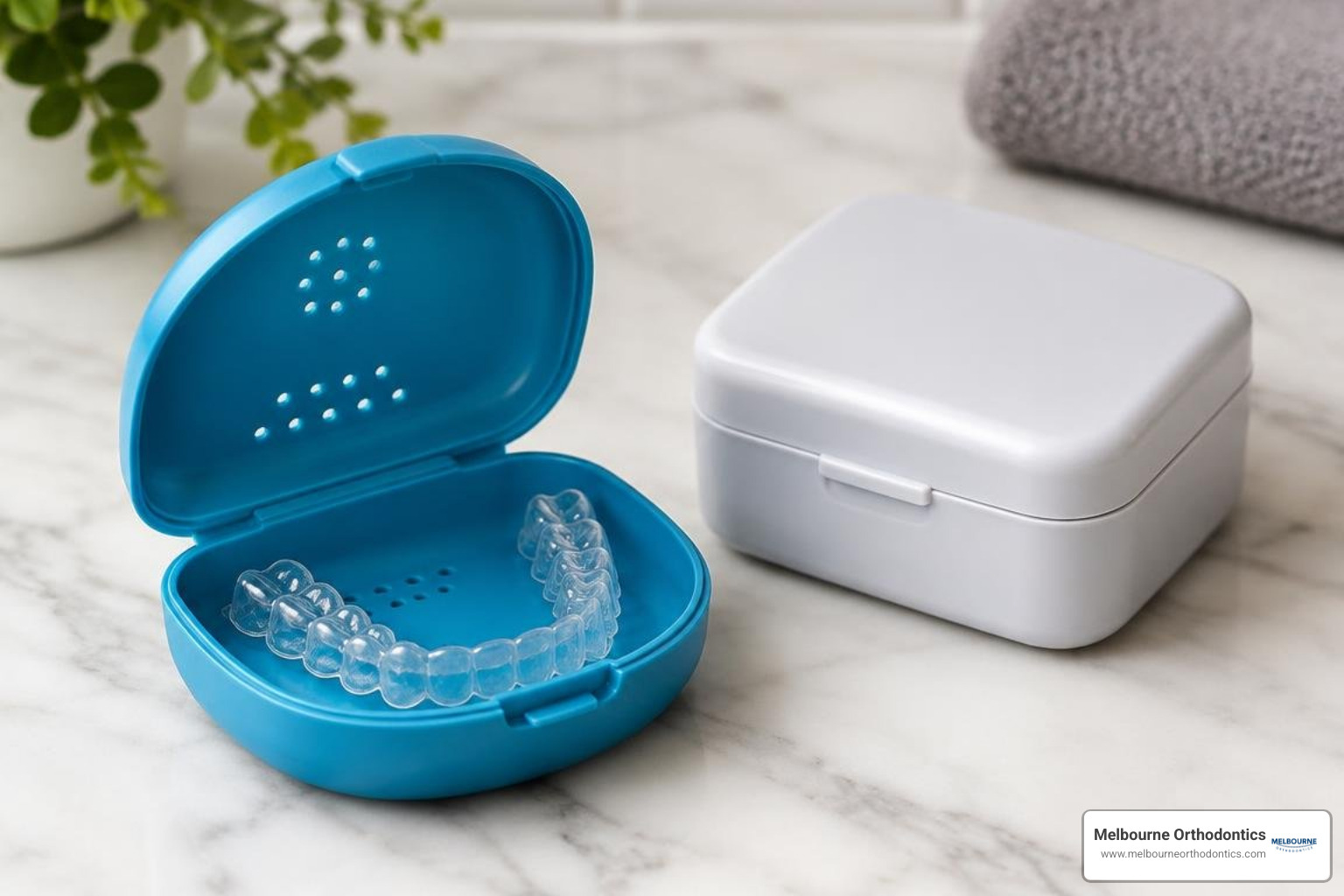
A clean retainer stays clean only if it is stored safely. Whenever your appliance is not in your mouth, place it in a dedicated, hard-shell container. Never wrap your retainer in a paper napkin or tissue—this is the most common reason retainers are accidentally thrown into the trash!
Keep your storage case high out of reach of family pets. Dogs are naturally attracted to the scent of saliva on dental appliances and can chew a custom retainer beyond repair in seconds. If an accident does occur, review our patient guide on Lost or Damaged Retainers: Next Steps for Patients to get your retention back on track right away.
Cleaning and Sanitizing Your Retainer Case
Your retainer case can quickly collect moisture, saliva residues, and airborne contaminants. If you put a freshly cleaned retainer into a dirty case, you undo all your hard work:
- Wash the Case Daily: Scrub your case inside and out with warm water and mild dish soap every day.
- Allow It to Air-Dry Completely: Choose a ventilated case with small air holes and let it dry open. Storing an appliance in a damp, sealed container creates a moist environment where mold thrives.
- Sanitize Weekly: Soak the case in a 1:1 mixture of white vinegar and water or wash it on the top rack of your dishwasher once a week. Replace your case if it develops persistent odors, physical cracks, or deep discoloration.
Recognizing Signs for Retainer Replacement
Even with meticulous daily maintenance, oral appliances do not last forever. Watch for these indicators that your appliance needs a professional evaluation or replacement:
- Persistent Cloudiness or White Crust: If heavy calcium deposits will not come off after an ultrasonic clean or vinegar soak, the material has calcified.
- Micro-Cracks and Structural Splits: Small cracks compromise the appliance’s structural integrity, allowing bacteria inside and reducing retention force.
- Loose or Debonded Wires: If a bonded wire clicks or feels loose against your tooth, schedule an appointment immediately to prevent teeth from shifting.
- Altered Fit or Looseness: If your retainer feels loose or requires excessive force to seat, it may have warped.
Frequently Asked Questions About Cleaning Retainers
How often should you deep clean a retainer versus just rinsing it?
You should rinse and brush your retainer twice a day—every morning and evening. Perform a deeper soak using specialized cleaning minerals, effervescent tablets, or a vinegar solution 1 to 2 times per week. If you notice tartar buildup or odor, you can safely deep-clean your appliance more frequently.
Can you use mouthwash to disinfect a dental retainer?
Standard mouthwash is not recommended for regular cleaning. Most commercial mouthwashes contain alcohol, artificial dyes, and astringents that dry out plastic, cause premature micro-cracking, and stain clear appliances blue or green. If you need a fast refresh and have no other cleanser available, soak the appliance in an alcohol-free mouthwash diluted with equal parts water for no more than 2 to 3 minutes.
What should you do if your retainer develops a persistent bad smell or white spots?
A persistent odor indicates trapped bacterial colonies, while chalky white spots represent hardened mineral deposits (calcium/tartar). First, soak your appliance in a solution of white vinegar for 20 minutes to dissolve mineral salts, then brush it gently with a baking soda paste. If the discoloration or odor remains, the time could be increased or you could use an ultrasonic cleaner.
Conclusion
Your smile represents a wonderful investment in your self-confidence and health. By sticking to a simple daily cleaning routine, keeping your storage case clean, and avoiding high heat and abrasive pastes, your retainers will stay fresh, clear, and comfortable for years to come.
As a reminder for our active orthodontic patients, please remember to change your interarch elastics at least once a day to maintain steady, effective alignment progress!
At Melbourne Orthodontics, Dr. Chad Reddick and our caring team are dedicated to supporting your smile throughout your retention journey. If your appliance is showing signs of wear, feels loose, or needs a replacement, visit our practice locations in Melbourne, Florida and Indian Harbour Beach, Florida. Explore our complete range of custom orthodontic retainers or contact us today to schedule your smile checkup!