Why Orthodontists Put Tiny Rubber Bands Around Braces Brackets
The Primary Types of Bands on Braces Brackets
When patients talk about bands on braces brackets, they are usually referring to three distinct types of orthodontic components. Each type plays a specialized role in moving your teeth into their ideal alignment as part of comprehensive treatment with dental braces.
| Band Type | Attachment Point | Clinical Function | Replacement Frequency |
|---|---|---|---|
| Ligature Ties | Wrapped around individual bracket wings | Secures archwire inside the bracket slot | Replaced by orthodontist every 4–8 weeks |
| Power Chains | Connected continuous loop across multiple brackets | Closes gaps and rotates stubborn teeth | Replaced by orthodontist every 4–8 weeks |
| Interarch Elastics | Stretched between top and bottom bracket hooks | Adjusts jaw alignment and bite relationship | Replaced by patient multiple times daily |
To learn more about what orthodontic elastics do, it helps to break down how each style interacts with your brackets and archwire.
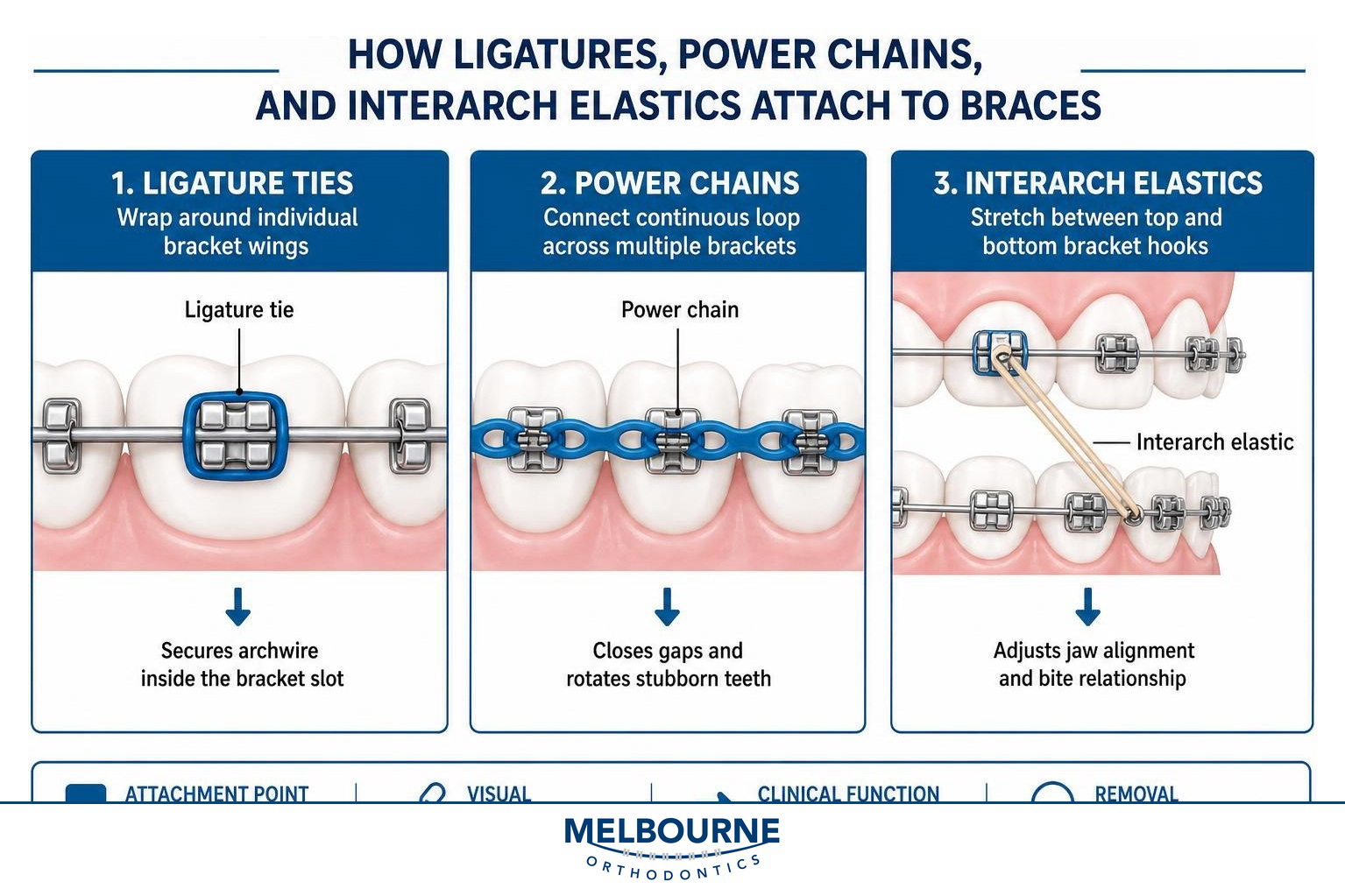
Ligature Ties vs. Interarch Elastics
Ligature ties (often called elastomeric O-rings) are tiny, stretchy donuts placed directly over the four wings of a bracket. Their sole task is binding the main archwire securely into the bracket slot so the wire can apply continuous, controlled mechanical pressure to guide individual teeth. You do not remove these yourself; we change them out during your regular adjustment visits using specialized clinical tools.
Interarch elastics, on the other hand, are the removable rubber bands you hook between your upper and lower arches. While the main wire straightens individual teeth within a single arch, interarch elastics correct your overall bite geometry and jaw relationships. By anchoring to small bracket hooks, they apply targeted directional force to address overbites, underbites, open bites, or crossbites. Understanding why you have to wear your rubber bands consistently is crucial because these elastics act as the primary engine driving major jaw shifts and bite alignment.
Continuous Power Chains and O-Rings
A power chain consists of an interconnected string of elastomeric O-rings linked together like a continuous chain. Instead of placing individual ligatures on each bracket, we stretch a single power chain across a row of teeth.
This connected elastic structure creates a stronger, unified traction force designed to close extra spacing after extractions, pull rotated teeth into line, or consolidate the arch. Power chain spools come in various link distances—closed, short, or long—depending on how much tension and spacing are required between neighboring bracket slots.
How Different Sizes, Tensions, and Materials Work
Orthodontic elastics are far from one-size-fits-all accessories. They are precision-engineered medical devices carefully calibrated in both diameter sizing (measured in fractions of an inch) and pull force (measured in ounces or grams).
Choosing Size and Force Levels for Bands on Braces Brackets
Common elastic sizes include 3/16-inch and 1/4-inch inner diameters, though clinical sizes range from 1/8-inch up to 3/8-inch. The force ratings applied to bracket hooks are typically categorized as:
- Light Force: ~2.5 to 3.5 ounces
- Medium Force: ~4.5 to 5.5 ounces
- Heavy Force: ~6.5 ounces or higher
We determine the exact size and force level based on the precise distance between your bracket hooks and the specific magnitude of movement needed to shift your jaw without causing discomfort or stressing tooth roots. Over hours of active wear, moisture, warmth, and constant stretching cause natural force degradation in intraoral rubber. This gradual loss of elasticity is why intraoral bands must be changed several times throughout the day to keep teeth moving steadily and predictably. If you are curious about how these accessories work alongside other specialized gear, take time exploring appliances beyond standard braces.
Latex vs. Non-Latex Materials
Standard interarch bands are manufactured from medical-grade natural rubber latex, which provides high elasticity, superior stretch memory, and stable force delivery over extended periods. However, for patients sensitive or allergic to natural rubber, we provide advanced synthetic latex-free options. Synthetic bands are hypoallergenic, resist oral degradation from saliva and foods, and deliver smooth, safe, continuous force for consistent treatment progress.
Colors, Maintenance, and Daily Care
Managing your bands on braces brackets is a daily routine that combines creative self-expression with diligent oral hygiene practices.
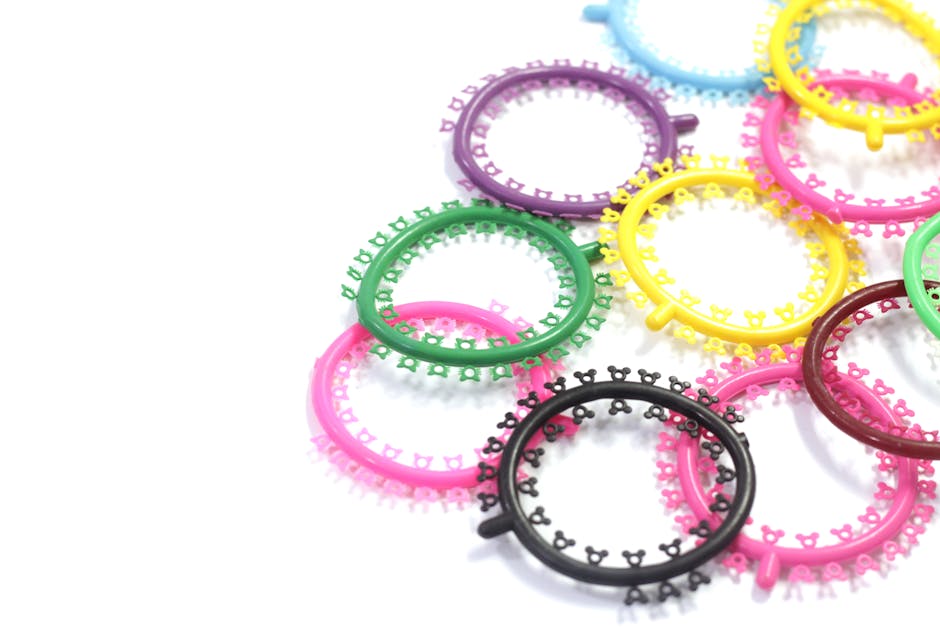
Choosing Colors for Bands on Braces Brackets
Ligature ties come in a wide rainbow of shades, making color selection one of the most popular parts of an adjustment visit!
- Vibrant Colors: Dark blue, purple, emerald green, and deep red complement metal brackets, resist food staining, and can make your teeth look noticeably bright and clean.
- Clear and White Bands: While subtle and discrete at first, clear or light-colored bands can absorb dark pigments from coffee, tea, mustard, or curry, turning yellowish between office appointments.
- Silver/Metallic: Blends seamlessly with stainless steel brackets while resisting discoloration throughout your adjustment cycle.
If you are looking for creative inspiration before your next appointment, read our comprehensive guide on how to pick the best color palette for your brackets.
Changing Schedules, Placement Tools, and Oral Hygiene
For interarch elastics, the golden rule is wearing them at least 22 hours a day. You should only remove them to eat meals, brush, and floss your teeth. Because rubber bands gradually lose their calibrated pull force, we recommend replacing them with fresh elastics at least once a day, or as your orthodontist advises.
When placing your elastics, clean fingers work well, but an ergonomic elastic placer tool (a small plastic hook) makes attaching bands to hard-to-reach back molar brackets much easier. Keeping your brackets clean requires diligent interdental care with threaders, interdental brushes, or water flossers, as elastomeric bands create small crevices that can trap food debris and plaque around bracket margins.
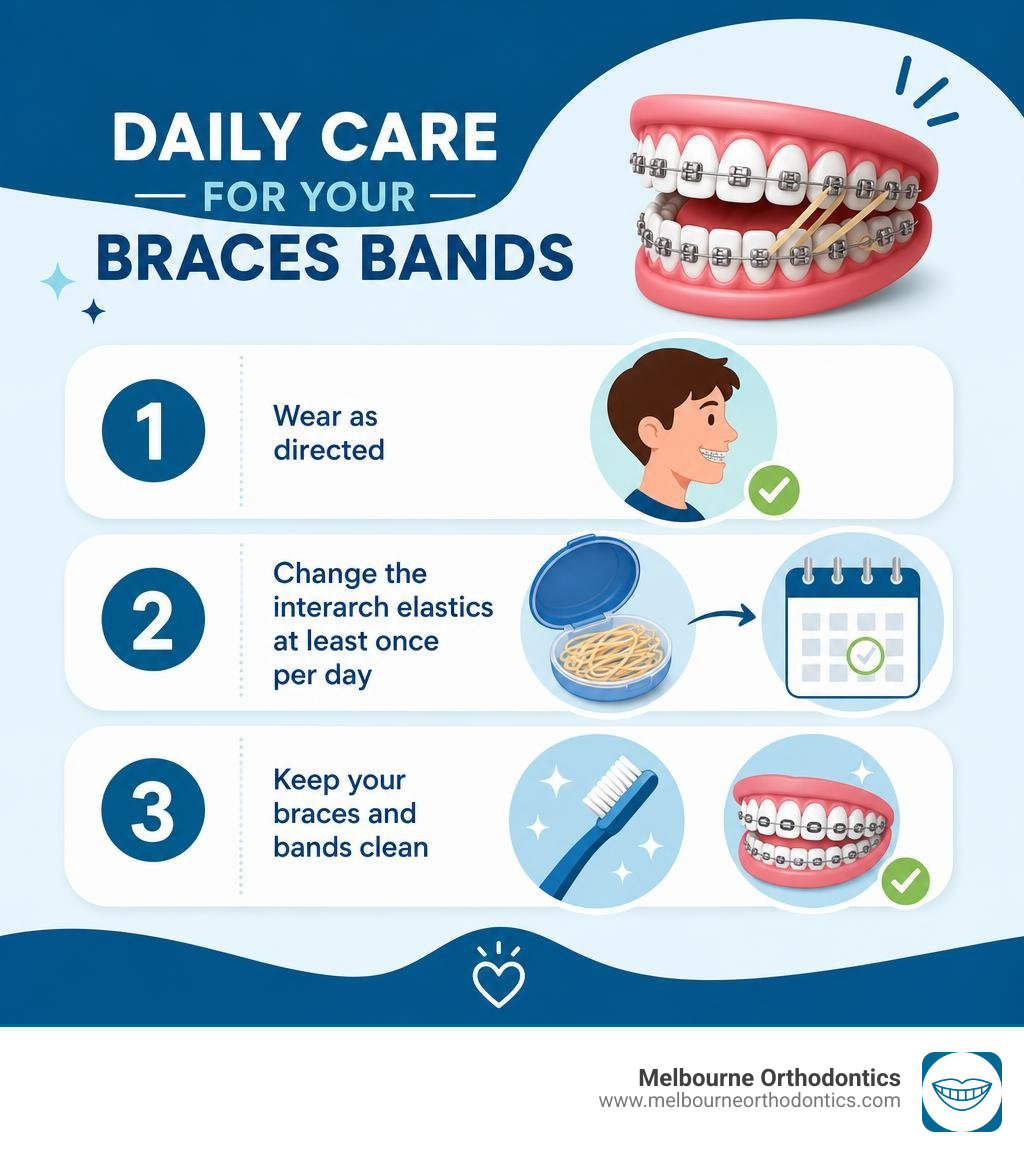
Review these essential tips for eating, speaking, and maintaining comfort with braces to keep your daily routine hassle-free, and check out general guidance on managing common challenges and life with braces.
Dangers of DIY Braces Bands and Alternative Uses
With DIY orthodontic kits sold online—often containing over 1,000 pieces of colored O-rings alongside cheap ligature guns—some patients are tempted to adjust or alter their braces at home. However, unsupervised orthodontic alterations carry severe risks to your dental health and long-term smile stability.
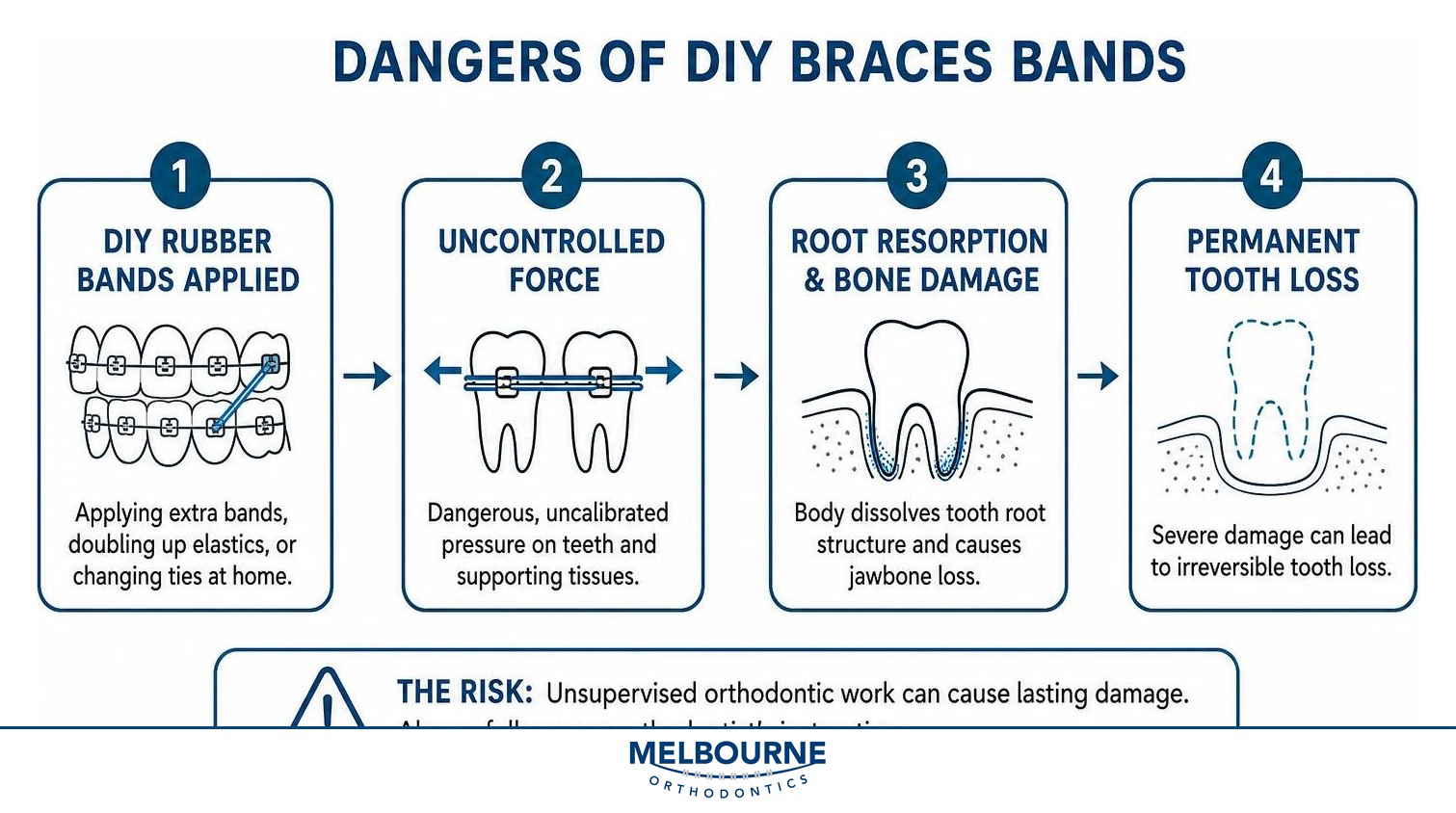
The Risks of Applying Bands at Home
Applying extra bands, doubling up interarch elastics, or changing ligature ties without professional orthodontic supervision can apply dangerous, uncalibrated force to your teeth and surrounding structures. Excessive or uncontrolled force restricts blood supply to the delicate periodontal ligament, potentially causing irreversible harm:
- Root Resorption: The body prematurely dissolves the tooth’s underlying root structure, shortening the root permanently.
- Jawbone Damage: Accelerated, uncoordinated bone loss around the tooth socket compromises stability.
- Permanent Tooth Loss: Teeth can become excessively loose, lose vital support, and fall out completely.
If something feels off or broken with your appliance, read about handling orthodontic emergencies and wire issues or discover what to do about common orthodontic problems rather than attempting dangerous home repairs.
Frequently Asked Questions About Bands on Braces Brackets
Can I change my bracket bands at home?
No. You should only replace the removable interarch elastics specifically prescribed and demonstrated by your orthodontist. Ligature ties holding the archwire securely in place must be changed exclusively by a professional using sterile clinical instruments like a ligature gun or Mathieu pliers to prevent accidental gum tissue injury or wire dislodgement.
What should I do if a ligature tie breaks?
If an individual colored band snaps or slips off a bracket wing, the main archwire may begin to flex away from the bracket slot, causing poking wire tips or slowing down planned tooth movement. Cover any sharp edges with soft orthodontic wax and contact our office right away. Learn what to do when your wire is poking you so you stay comfortable until your repair appointment.
How do performers and athletes manage braces bands?
Musicians who play brass or woodwind instruments may need a week or two to adapt their lip posture and embouchure to brackets and elastics. Applying smooth orthodontic wax over outer bracket wings prevents lip chafing during long rehearsals. Athletes should always wear a custom-fitted orthodontic mouthguard that fits comfortably over brackets and elastics to protect delicate oral tissues and teeth during contact sports.
Conclusion
Whether securing your archwire or shifting your jawline into harmony, bands on braces brackets are essential to achieving a healthy, confident smile. By keeping up with your daily elastic routine and leaving bracket adjustments to our team, you ensure your treatment stays on track every step of the way.
At Melbourne Orthodontics, Dr. Chad Reddick and our experienced team provide patient-focused care tailored to families across Melbourne, West Melbourne, Eau Gallie, Indian Harbour Beach, Satellite Beach, Lansing Island, and nearby communities. Schedule your consultation to learn what orthodontic elastics do for your smile today!