Safe Foods and Snacks to Enjoy Throughout Orthodontic Treatment
Foods to Avoid With Braces and What to Eat Instead
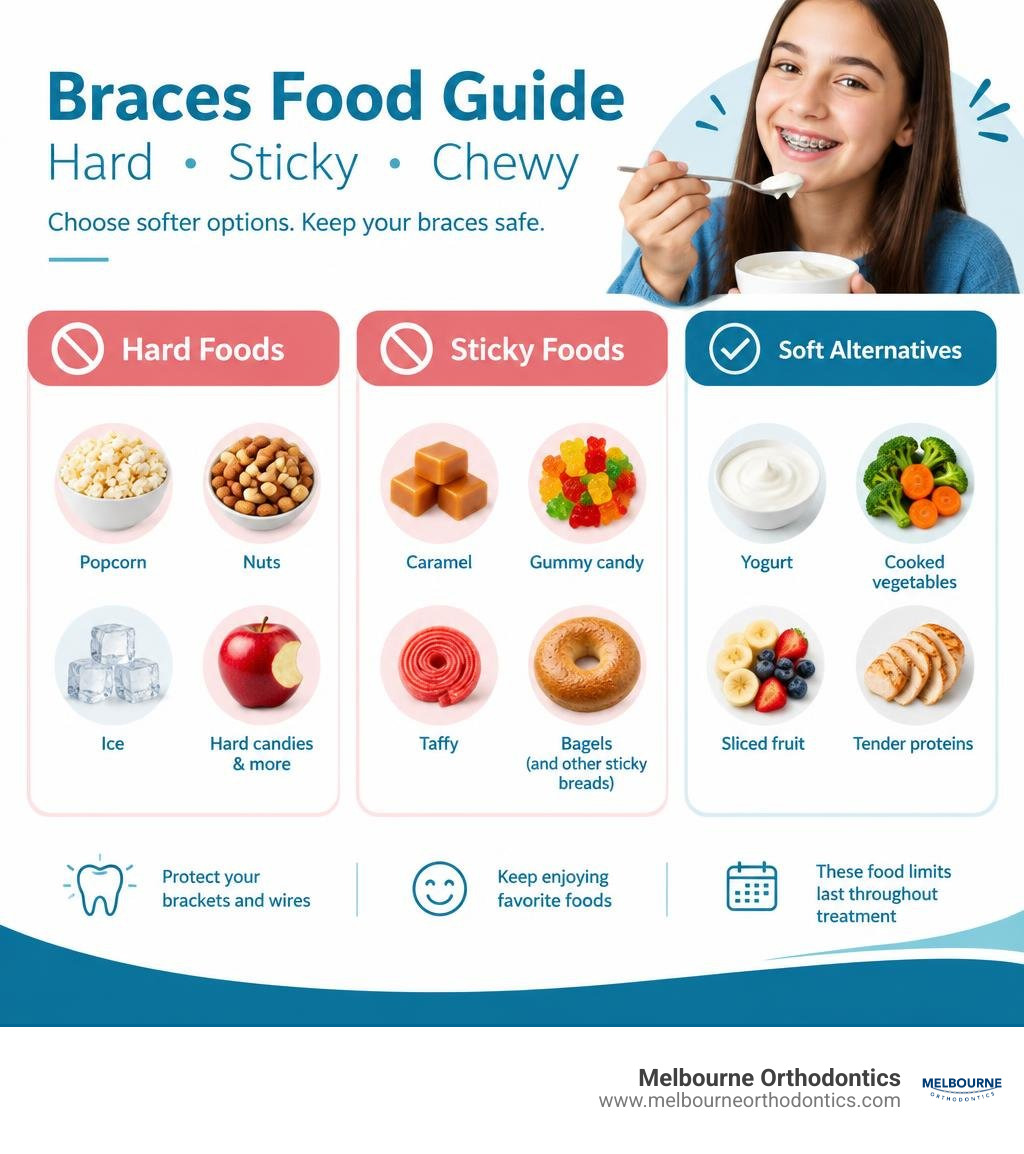
Avoid hard, sticky, and tough-to-chew foods while you have braces. Popcorn, nuts, ice, caramel, and chewy bagels can loosen brackets or bend wires. Choose softer options like yogurt, cooked vegetables, sliced fruit, and tender proteins. You can still enjoy many favorite meals by cutting them into small bites and skipping hard crusts.
These food limits last throughout treatment, even after the first week of soreness passes. If you wear interarch elastics, change them at least once a day as recommended.
I’m Dr. Chad Reddick, the orthodontist at Melbourne Orthodontics, and I completed three years of specialized orthodontic training after dental school. I help patients in Melbourne and Indian Harbour Beach understand which foods to avoid with braces and find snacks they can enjoy.
Other potentially relevant topics:
Detailed Breakdown of Foods to Avoid Braces Wearers Must Know
Orthodontic appliances work through precise biomechanics. Brackets are bonded directly to the surface of your enamel using a specialized dental adhesive, and flexible archwires guide your teeth into optimal alignment over time. While modern adhesives are strong, they are calibrated to allow safe removal at the end of treatment without fracturing your enamel.
When you bite down on dense or unyielding items, you create intense shearing forces. These forces exceed the bond strength of the dental cement, instantly popping brackets off your teeth or twisting delicate archwires out of shape. Understanding these mechanical limits is key to avoiding treatment delays. Review our essential food limitations to protect your appliances from unnecessary stress.
| Food Category | Damage Mechanism | Examples to Avoid | Safe, Delicious Swaps |
|---|---|---|---|
| Hard & Dense | Exerts sudden shearing force that pops brackets off enamel | Whole nuts, ice cubes, hard pretzels, hard candies | Soft nut butters, soft crackers, steamed vegetables, applesauce |
| Sticky & Tacky | Wraps around brackets and pulls with sustained mechanical tension | Caramel, taffy, gummy candy, fruit roll-ups | Soft pudding, yogurt, plain melt-in-your-mouth chocolate |
| Tough & Chewy | Places prolonged bending stress on archwires and molar bands | Bagels, beef jerky, thick pizza crust, hard rolls | Soft sandwich bread, flaky pastries, shredded meats |
| Bite-and-Tear | Front-tooth leverage rips brackets directly off incisors | Whole apples, raw carrots, corn on the cob | Thinly sliced apples, steamed carrots, corn cut off the cob |
| Sugary & Acidic | Traps plaque around appliances, accelerating demineralization | Regular soda, energy drinks, sour candies | Cold water, milk, unsweetened herbal teas |
Hard and Chewy Foods to Avoid Braces Wearers Often Overlook
Some of the most common culprits behind appliance emergencies are everyday staples that seem harmless. Popcorn is notorious in orthodontic offices: unpopped kernels crack brackets with ease, while the thin husks slip beneath the gumline and archwires, triggering painful tissue inflammation and localized infections. Ice cubes are another major hazard—chewing on ice is one of the fastest ways to fracture both dental appliances and natural enamel.
Tough, crusty artisan breads and dense New York-style bagels also exert heavy upward and downward torque on your molar attachments. When you attempt to bite and tear these foods with your front teeth, the leverage easily snaps off brackets. To keep your hardware intact, review our guide to foods that can damage braces and smart alternatives before reaching for crunchy snacks.
Sweet Snacks and Foods to Avoid Braces Enamel Risks
Sticky sweets like caramel, taffy, and thick chewing gum act like industrial glue against your orthodontic brackets. As you chew, these tacky substances wedge themselves into the tiny crevices beneath your archwires and exert constant pulling pressure until a bracket detaches.
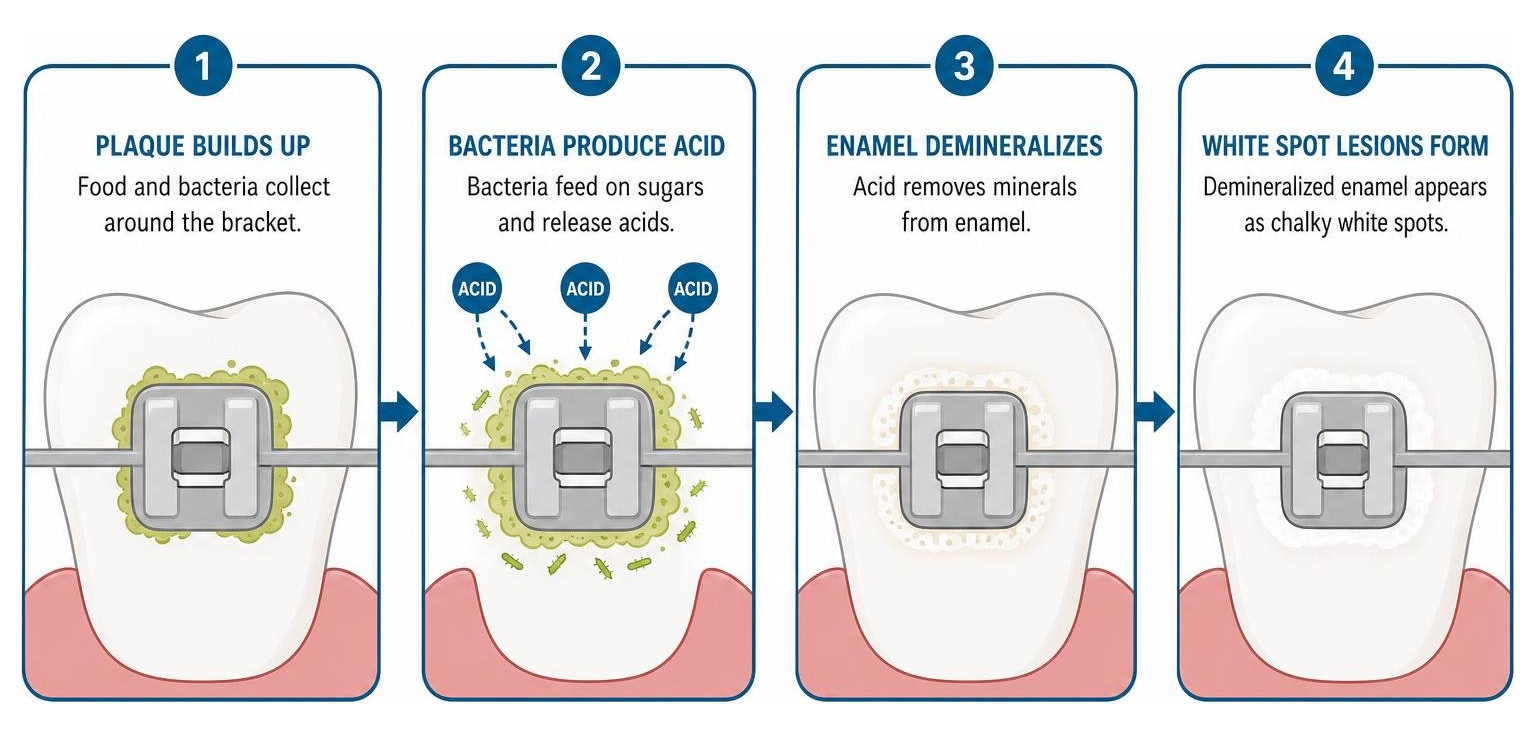
Beyond physical breakage, sweet and sticky treats pose a severe biological threat to your tooth enamel. Brackets create microscopic ledges where food debris and plaque naturally accumulate. When you consume refined sugars and acidic drinks, oral bacteria metabolize those carbohydrates into enamel-eroding acids. This process causes rapid demineralization, leading to permanent, chalky white spot lesions around your bracket margins once your braces come off. Learning why sugar is so bad for braces and steering clear of common drinks to avoid with braces will preserve your bright, healthy enamel throughout care.
Delicious and Safe Alternatives for Every Meal and Snack
Adopting an orthodontic diet does not mean surviving on bland, boring meals. By shifting your focus toward naturally tender, nutrient-dense foods, you can protect your hardware while giving your body the vitamins and minerals necessary for healthy bone remodeling.
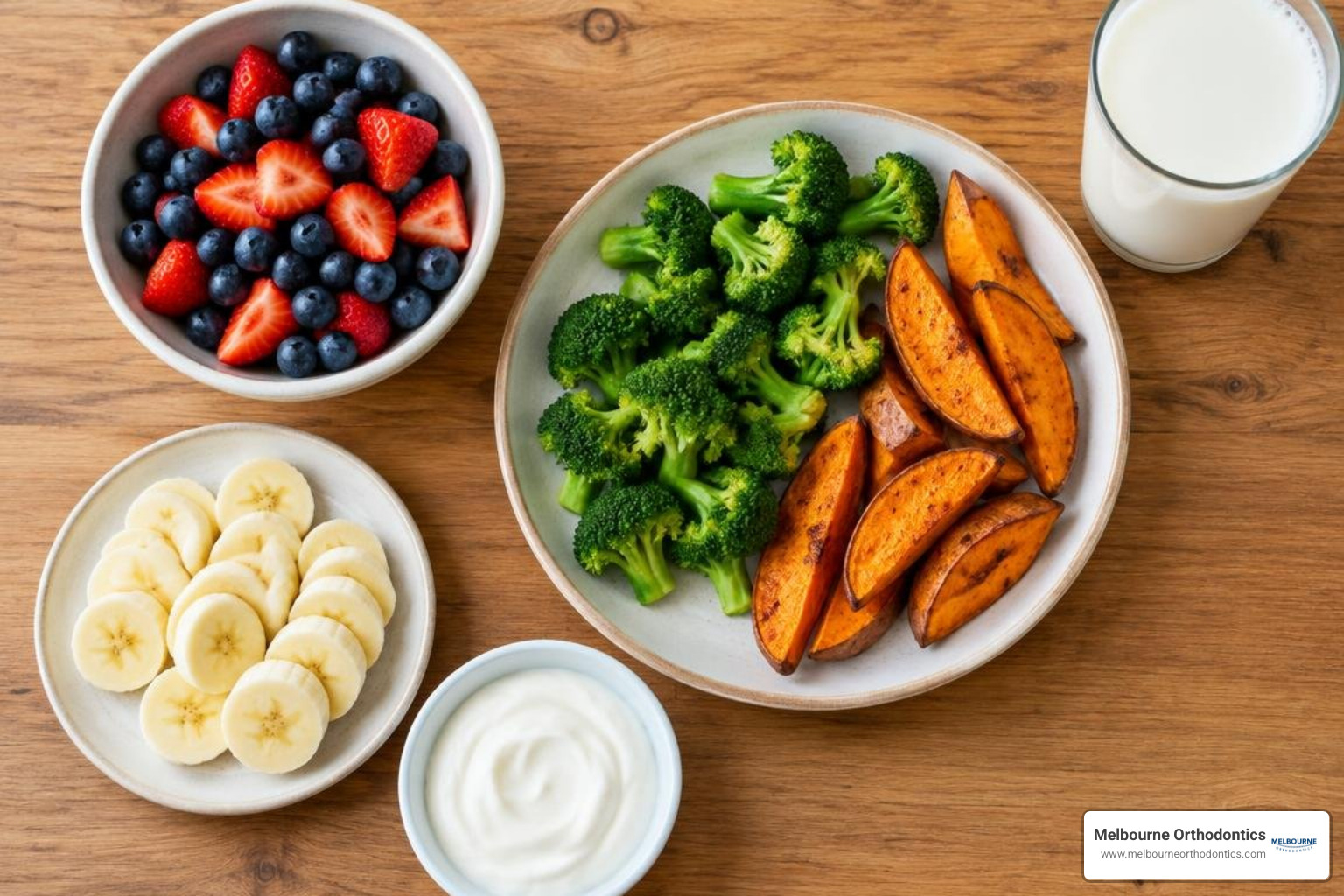
A balanced, braces-friendly menu includes:
- Soft Fruits & Berries: Bananas, ripe peaches, melon wedges, blueberries, and unsweetened applesauce.
- Cooked & Steamed Vegetables: Roasted sweet potatoes, steamed broccoli florets, tender green beans, and vegetable soups.
- Tender Proteins: Flaky baked fish, scrambled or poached eggs, ground turkey, soft tofu, and slow-cooked shredded chicken.
- Wholesome Dairy & Grains: Greek yogurt, cottage cheese, soft-cooked pasta, oatmeal, and fluffy rice bowls.
Stocking your pantry with brace-friendly foods makes it easy to snack smart during orthodontic treatment without putting your brackets at risk.
Modifying Everyday Favorites: Pizza, Chips, and Sweets
You do not have to eliminate all of your favorite comfort foods during your smile journey. With minor preparation adjustments, you can enjoy them safely:
- Pizza: Skip thick, rock-hard deep-dish crusts. Opt for soft, thin-crust pizza, remove the crunchy outer edges, and cut slices into small, fork-friendly bites.
- Snack Chips: Dense kettle-cooked potato chips and hard corn tortilla chips can easily break brackets and bend wires. Swap them for light, melt-in-your-mouth crisps, baked cheese puffs, or soft pita bread dipped in hummus. Chew carefully using your back molars.
- Desserts & Chocolates: Avoid candy bars packed with whole almonds, toffee, or caramel centers. Plain milk or dark chocolate squares, soft peanut butter cups, and fruit smoothies satisfy your sweet tooth gently. Explore our list of safe candy for braces to celebrate holidays and special occasions without appliance emergencies.
What to Eat During the First Week After Placement or Adjustments
When your braces are first placed or your wires are adjusted, your periodontal ligaments undergo a temporary inflammatory response as your teeth begin shifting. Initial soreness typically peaks within 24 to 48 hours and gradually resolves over three to seven days.
During this transition, minimize all chewing pressure by sticking to ultra-soft meals. Chilled fruit smoothies, warm creamy broths, mashed potatoes, scrambled eggs, and Greek yogurt provide soothing nutrition while your oral tissues adapt. For creative meal ideas during your initial days, check out our favorite delicious foods to enjoy after getting your braces on.
Dietary Differences: Traditional Braces vs. Clear Aligners
Dietary rules vary depending on the type of appliance you use. Traditional fixed braces remain attached to your teeth 24/7, requiring continuous food awareness to prevent hardware damage. Clear aligners, on the other hand, are removable, allowing you to enjoy your usual foods without risking broken brackets.
However, aligners introduce their own set of habits and dietary precautions:
- Remove Before Eating: You must remove clear aligner trays before consuming any food or snack. Chewing with aligners in place can warp, crack, or puncture the medical-grade plastic.
- Beverage Temperature Rules: Drinking hot coffee, tea, or warm soup while wearing aligners can soften and distort the trays, destroying their precise tooth-moving calibration.
- Staining & Hygiene Risks: Sipping dark liquids like iced coffee, red wine, or soda with aligners seated traps pigments and sugars against your enamel, causing noticeable discoloration and rapid plaque buildup. Always drink plain water when your trays are in, and brush your teeth before snapping them back into place.
To learn more about how appliance choices impact your daily routine, read our breakdown on whether all braces come with dietary restrictions.
Handling Orthodontic Emergencies and Daily Appliance Care
Accidents can happen even when you are careful with your diet. If a bracket pops loose from a tooth or a wire slips out of place, remain calm. A loose bracket generally stays secured to the archwire by its elastic tie. If the appliance pokes your cheek, roll a pea-sized piece of orthodontic wax between your fingers and press it firmly over the troublesome spot.
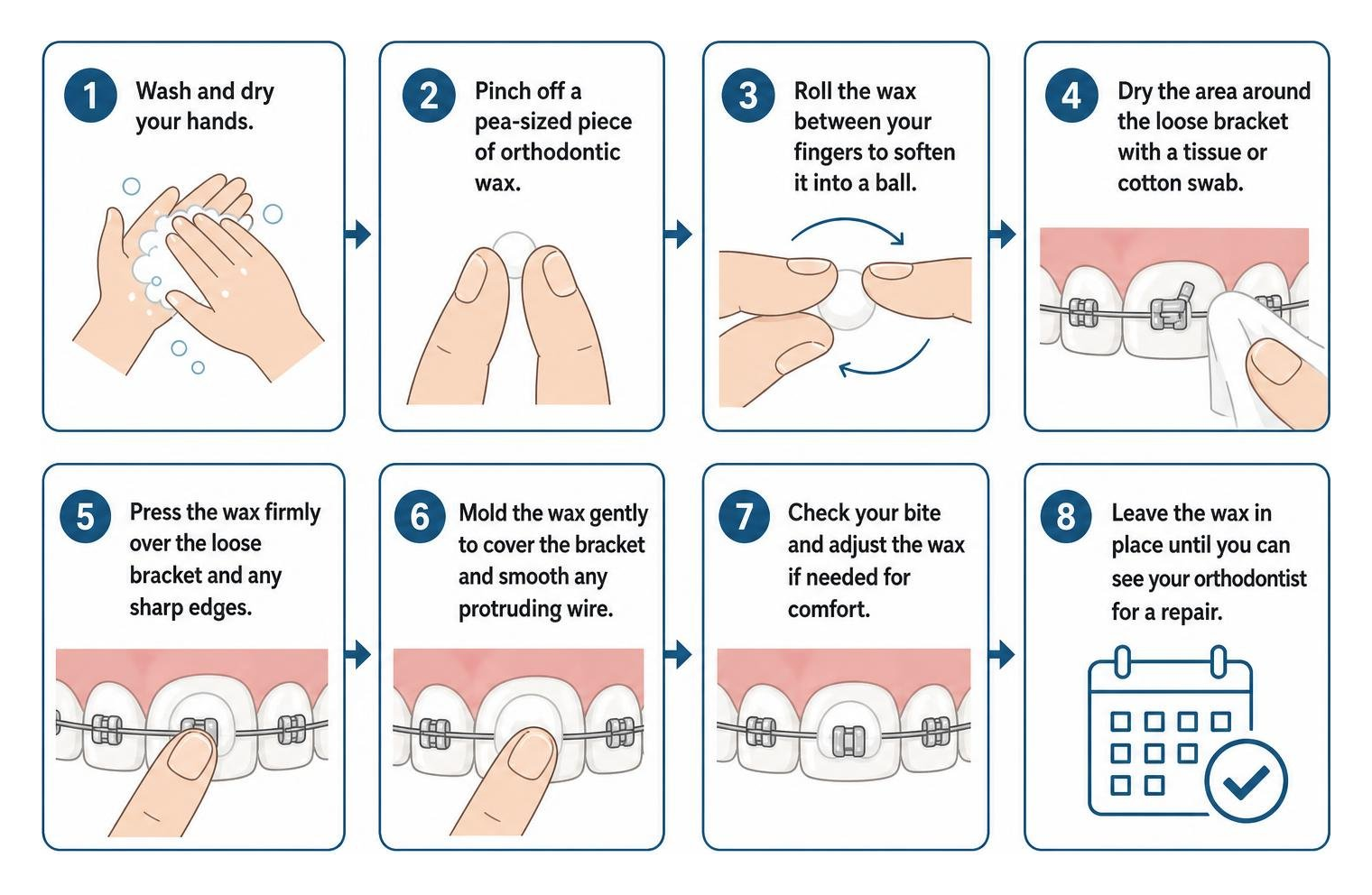
Never attempt to clip active archwires with household tools. Instead, call our office promptly so we can repair your hardware. Broken brackets interrupt the continuous force needed to guide your teeth, which can stretch your overall timeline by weeks if emergencies occur repeatedly.
Consistent at-home habits protect your investment. Brush thoroughly around each bracket after meals, floss daily with orthodontic threaders, and ensure you change your interarch elastics at least once a day as prescribed to maintain continuous, gentle alignment pressure. If you are balancing a busy lifestyle, our advice for navigating dietary changes with adult braces offers helpful strategies for social dining and work events.
Frequently Asked Questions About Orthodontic Diets
How long after getting braces can you eat normally again?
Most patients transition from an ultra-soft diet back to a regular, braces-safe routine within three to seven days. As your initial soreness subsides, you can gradually reintroduce firmer textures like pasta, tender meats, and cooked vegetables, as long as you continue to avoid hard, crunchy, and sticky items throughout treatment.
What should you do if you break a bracket while eating?
If a bracket detaches from your tooth, check if it is still attached to the wire. If it rotates or irritates your cheek, apply a small ball of orthodontic wax to stabilize it. Avoid chewing on that side of your mouth, and call our office to schedule a repair visit as soon as possible so your treatment stays on track.
Which patients need to be most careful about their diet with braces?
Patients with aesthetic ceramic brackets need extra caution because ceramic material is more brittle than stainless steel and chips more easily against hard foods. Younger patients and individuals wearing interarch elastics must also remain vigilant, as sudden forces can break delicate hooks, dislodge attachments, and increase the risk of enamel decalcification around bracket bases.
Conclusion
Protecting your braces requires simple dietary awareness, but the reward is a lifetime of confidence and healthy oral function. By avoiding hard, sticky, and sugary foods, preparing your meals thoughtfully, and replacing your interarch elastics at least once a day, you will keep your smile journey moving forward smoothly.
At Melbourne Orthodontics, Dr. Chad Reddick and our caring team support patients across Melbourne and Indian Harbour Beach through every stage of care. If you are ready to start your journey toward a straight, functional smile, explore our comprehensive orthodontic treatment options or schedule your consultation with us today!