Braces for Teeth: Navigating Your Treatment Options Close to Home
Exploring Modern Systems to Brace Teeth Near Me
Orthodontic technology has advanced significantly, giving patients more discreet, efficient, and comfortable appliances than ever before. When you explore how to brace teeth near you, understanding the differences between these systems helps you determine which option best fits your daily routine and cosmetic goals.
Every smile is distinct, which is why we offer a comprehensive range of types of braces to address issues ranging from minor crowding to severe jaw misalignments.
| Treatment Type | Best For | Aesthetic Profile | Key Advantages |
|---|---|---|---|
| Traditional Metal | All malocclusions, children, teens, and adults | Visible (customizable colored bands) | High durability, precise control, cost-effective |
| Ceramic (Clear) | Teens and adults seeking cosmetic discretion | Tooth-colored or translucent | Blends naturally with teeth, highly effective |
| Self-Ligating | Patients wanting fewer adjustment visits | Metal or clear options | Uses specialized clips instead of elastics, easy to clean |
| Clear Aligners | Mild to complex alignment, busy lifestyles | Virtually invisible | Removable for meals, smooth plastic trays |
Assessing Modern Brackets When Searching to Brace Teeth Near Me
Traditional metal braces remain the gold standard of orthodontic care. Constructed from high-grade stainless steel, modern brackets are far smaller, flatter, and more comfortable than the bulkier designs of past decades. They deliver steady, precise forces to guide teeth into their ideal positions. Many young patients love personalizing their appliances with colorful ligature ties at every adjustment.
For patients who prefer a less noticeable approach, ceramic brackets provide an excellent aesthetic alternative. Made from translucent or tooth-colored materials, ceramic braces blend in with your natural enamel. They offer the exact same tooth-moving power as metal brackets while minimizing the visual appearance of orthodontic hardware—making them a favorite among working professionals and image-conscious teens.
Who Is an Ideal Candidate for Orthodontic Treatment?
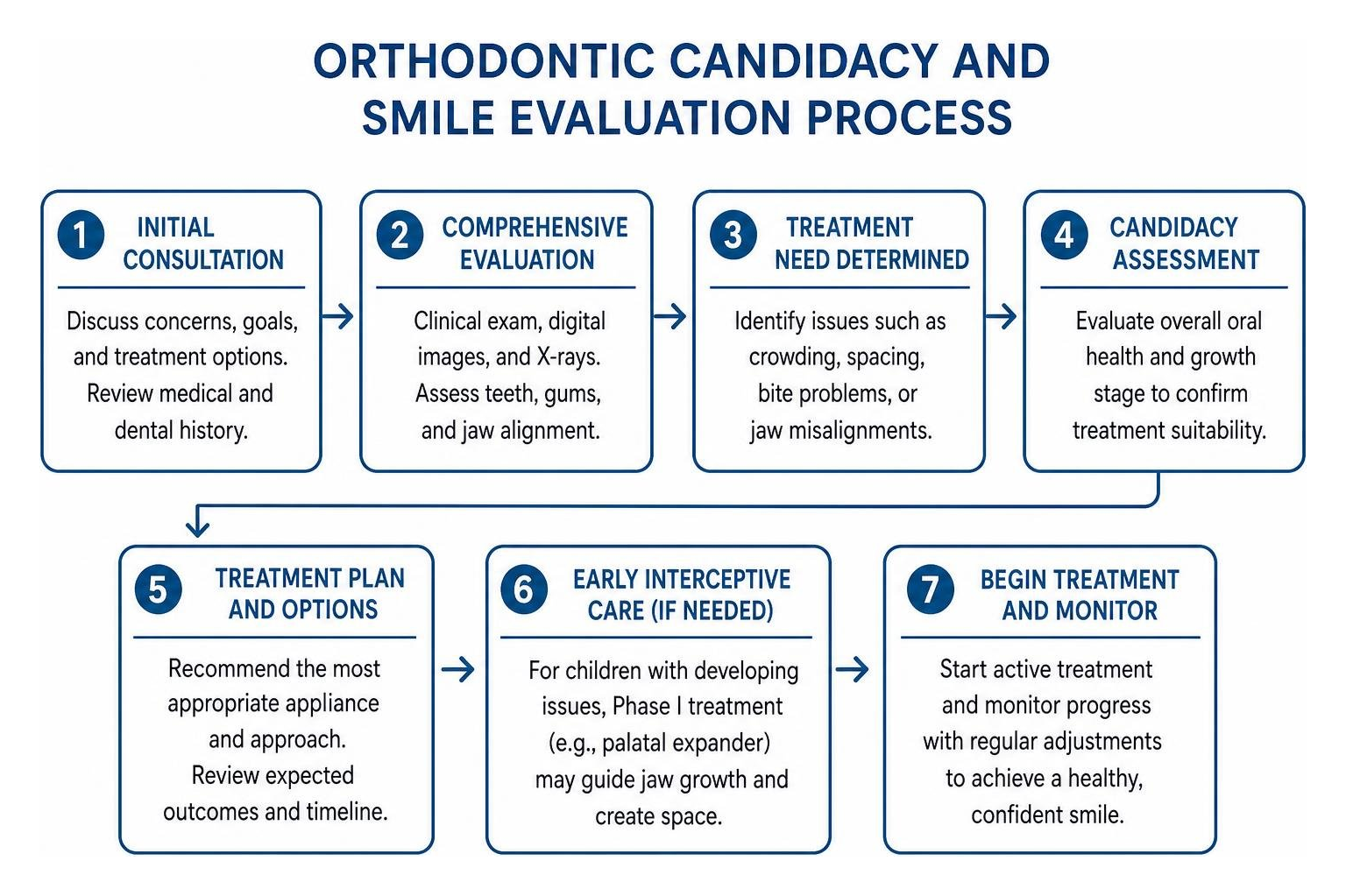
Almost anyone experiencing dental crowding, spacing, or bite irregularities can benefit from modern orthodontics. Determining who is a good candidate for braces involves assessing tooth positioning, periodontal health, and jaw alignment.
Correcting a malocclusion does far more than enhance cosmetic appeal. Straight teeth are significantly easier to brush and floss, reducing long-term risks of tooth decay, gingivitis, and abnormal enamel wear. A balanced bite also distributes chewing forces evenly, alleviating unnecessary strain on your jaw joints.
Early Interceptive Care for Children and Teens
The American Association of Orthodontists recommends that children receive their initial orthodontic evaluation at the first sign of a bite problem, or no later than age 7. At this developmental milestone, the first permanent molars have erupted, establishing the back bite and allowing us to evaluate front-to-back and side-to-side jaw relationships.
Identifying the ideal age for starting braces does not always mean putting brackets on right away. For many young patients, early monitoring is all that is required. However, if severe crowding, crossbites, or harmful oral habits are present, interceptive Phase I treatment (such as a palatal expander) can guide proper jaw development, creating adequate space for incoming adult teeth and preventing more invasive procedures later.
Comprehensive Solutions for Adult Patients
Orthodontic care is never limited by age. Today, one in four orthodontic patients is an adult, and roughly one out of every five patients is over the age of 21. As long as your gums and supporting bone structure are healthy, teeth can be safely shifted at thirty, fifty, or seventy.
Many adults seek treatment to correct shifting that occurred later in life, relieve chronic jaw tension, or finally achieve the confident smile they have always wanted. Learning about braces and aging for adult smile alignment reassures patients that age is no barrier to achieving exceptional functional and cosmetic results.
The Treatment Journey: Placement, Daily Hygiene, and Care
Embarking on orthodontic treatment is a collaborative process between you and our team. Understanding the step-by-step experience makes your journey smooth, predictable, and stress-free.
Preparation and Getting Braces Placed
The first step in your smile transformation is a comprehensive bonding appointment. Knowing what to expect during your bonding appointment removes any uncertainty:
- Polishing and Preparation: We gently clean and dry your teeth to ensure optimal adhesive performance.
- Conditioning: A mild conditioning gel is applied to the enamel to prepare the surface for bonding, then rinsed and dried.
- Bracket Placement: We apply a specialized dental adhesive to each bracket, positioning it precisely on each tooth before the adhesive cures.
- Archwire Engagement: Once brackets are secure, we thread the initial flexible archwire through the slots and secure it with elastics or self-ligating clips.
Reviewing the complete process of getting braces helps ensure you feel completely at ease during this painless, straightforward visit.
Maintenance, Elastic Wear, and Dietary Guidance
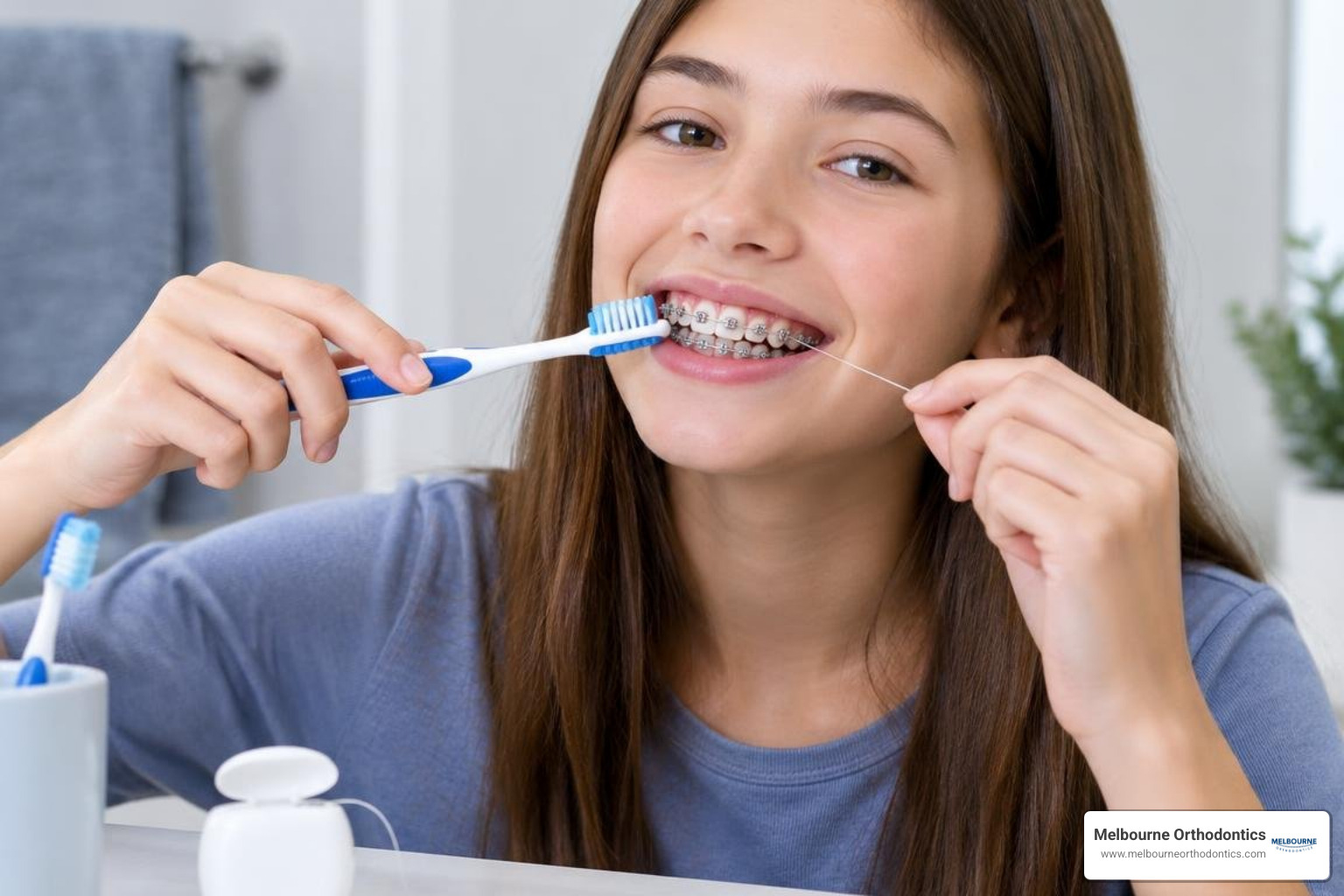
Caring for braces requires mindful daily habits. Because brackets and wires create small crevices where food debris and plaque gather, thorough oral hygiene is essential:
- Brushing: Brush thoroughly after every meal using a soft-bristled toothbrush and fluoride toothpaste.
- Interdental Cleaning: Utilize interproximal brushes and threader floss or a water flosser daily to remove debris from under archwires and along gumlines.
- Dietary Adjustments: Avoid hard, crunchy, sticky, or chewy foods (such as whole nuts, hard candies, popcorn kernels, and sticky caramels) that can dislodge brackets or bend wires.
- Interarch Elastics: If your treatment plan includes rubber bands to coordinate your upper and lower jaw alignment, patients are recommended to change their interarch elastics at least once a day to maintain steady, effective tension.
Equipping yourself with strategies for managing common orthodontic challenges—such as using orthodontic wax for minor bracket friction—keeps you comfortable throughout your care.
Treatment Timelines, Financing, and Choosing a Provider
Planning for orthodontic treatment involves understanding how long your treatment will take, evaluating costs and insurance benefits, and selecting the right local specialist.
Average Treatment Duration and Accelerated Solutions
Most patients wear braces for 18 to 24 months. However, total time varies based on individual factors:
- Severity of Malocclusion: Minor spacing or crowding can often be resolved in 6 to 12 months, whereas complex skeletal bite corrections require longer treatment times.
- Patient Compliance: Wearing your interarch elastics as directed, keeping all scheduled appointments, and avoiding broken brackets keep your smile on schedule.
- Biological Response: Every person’s bone remodeling process occurs at its own natural pace.
Learn more about how long braces treatment lasts to set realistic expectations. Once your active treatment concludes, wearing custom retainers protects your investment—ensuring long-term retention and lifelong smile stability.
Evaluating Local Providers to Brace Teeth Near Me
Selecting an orthodontic provider close to home makes attending regular checkups convenient. When evaluating local practices in Melbourne or Indian Harbour Beach, look for:
- Specialized Credentials: Orthodontists complete two to three additional years of full-time residency training beyond dental school, focusing exclusively on tooth movement and facial orthopedics.
- Comprehensive Treatment Options: A great provider will objectively walk you through comparing braces or clear aligners so you can choose the system best suited to your needs.
- Flexible Financing Solutions: Look for practices that accept various dental insurance plans, assist with FSA/HSA accounts, and provide interest-free, in-house payment options.
- Positive Community Reputation: Consistent five-star patient reviews and a welcoming, family-centered atmosphere ensure a supportive treatment experience.
Frequently Asked Questions About Local Orthodontic Care
How do I know whether traditional braces or clear aligners are right for me?
Both systems deliver outstanding results. Fixed braces provide continuous, non-stop force without requiring daily removal, making them ideal for complex corrections and patients who prefer not to manage removable trays. Clear aligners offer complete aesthetic discretion and the freedom to remove trays for meals and oral hygiene, but they require strict compliance (20 to 22 hours of daily wear). During your initial exam, we will assess your bite and help you select the ideal modality.
How often do I need adjustment appointments during treatment?
Most patients visit us every 4 to 8 weeks. During these visits, we evaluate tooth movement, replace or adjust archwires, refresh elastic ligatures, and check overall oral hygiene. These visits are quick, comfortable, and essential for keeping your smile progression on schedule.
Will dental insurance cover orthodontic braces?
Many dental benefit plans include specific orthodontic coverage that pays a percentage of treatment up to a lifetime maximum. Our administrative team verifies your insurance benefits directly, files claims on your behalf, and coordinates flexible monthly payment plans to keep your out-of-pocket costs manageable.
Conclusion
A healthy, beautifully aligned smile enhances oral wellness, boosts self-esteem, and protects your teeth for a lifetime. At Melbourne Orthodontics, Dr. Chad Reddick and our caring team take pride in providing personalized, modern orthodontic solutions for children, teens, and adults throughout Melbourne and Indian Harbour Beach, Florida.
To discover the best path forward for your smile, explore comprehensive braces treatment options or contact our team to schedule a consultation today.