Braces Color Selection Guide for Kids, Teens, and Adults
Choose Braces Colors That Fit Your Smile and Style
The best braces color options depend on the look you want. Choose deep blue, purple, navy, or teal to create contrast that can make teeth look brighter. Choose silver, gray, or muted navy for a subtle, professional look. Avoid clear, white, pale yellow, brown, and dark green ties if staining or a yellow-tooth effect concerns you.
Colored braces bands are tiny elastic ligatures that fit around traditional brackets and hold the archwire in place. You can usually pick new ligature colors at adjustment visits, often every 6 to 8 weeks, so there is room to try school colors, seasonal themes, or a more discreet shade. Patients who wear interarch elastics are recommended to change them at least once a day, but these are different from the colored ligatures around brackets.
I am Dr. Chad Reddick, an orthodontist at Melbourne Orthodontics serving patients in Melbourne and Indian Harbour Beach, Florida. I help children, teens, and adults compare braces color options as part of a treatment plan that supports both a healthy bite and a confident smile.
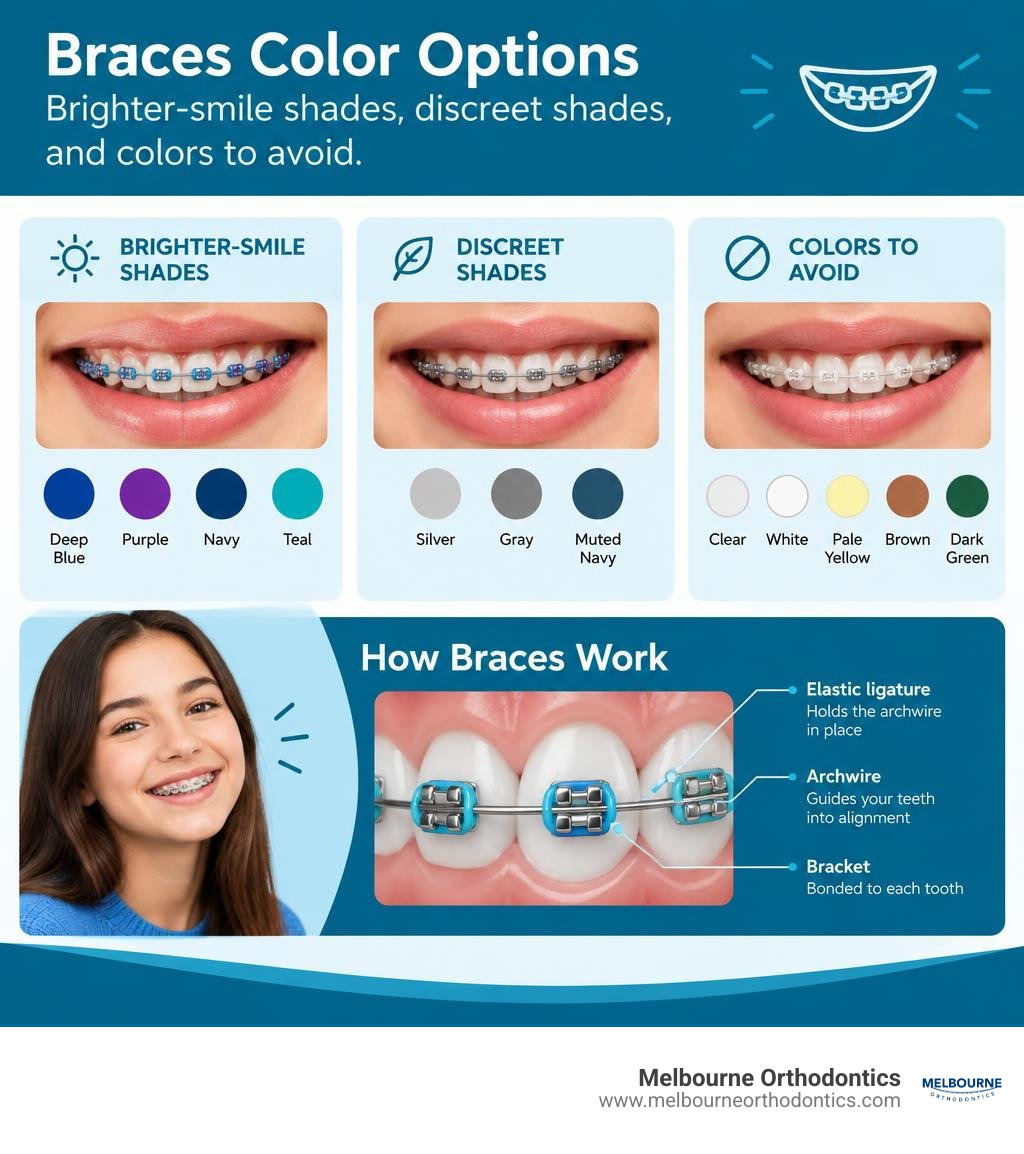
How Orthodontic Elastics and Brackets Work
Understanding how braces create a straighter smile makes choosing your colors much easier. When getting traditional metal braces, small stainless steel brackets are securely bonded to the front of each tooth. A flexible metal archwire runs across these brackets, exerting gentle, continuous pressure to guide your teeth into proper alignment over time.
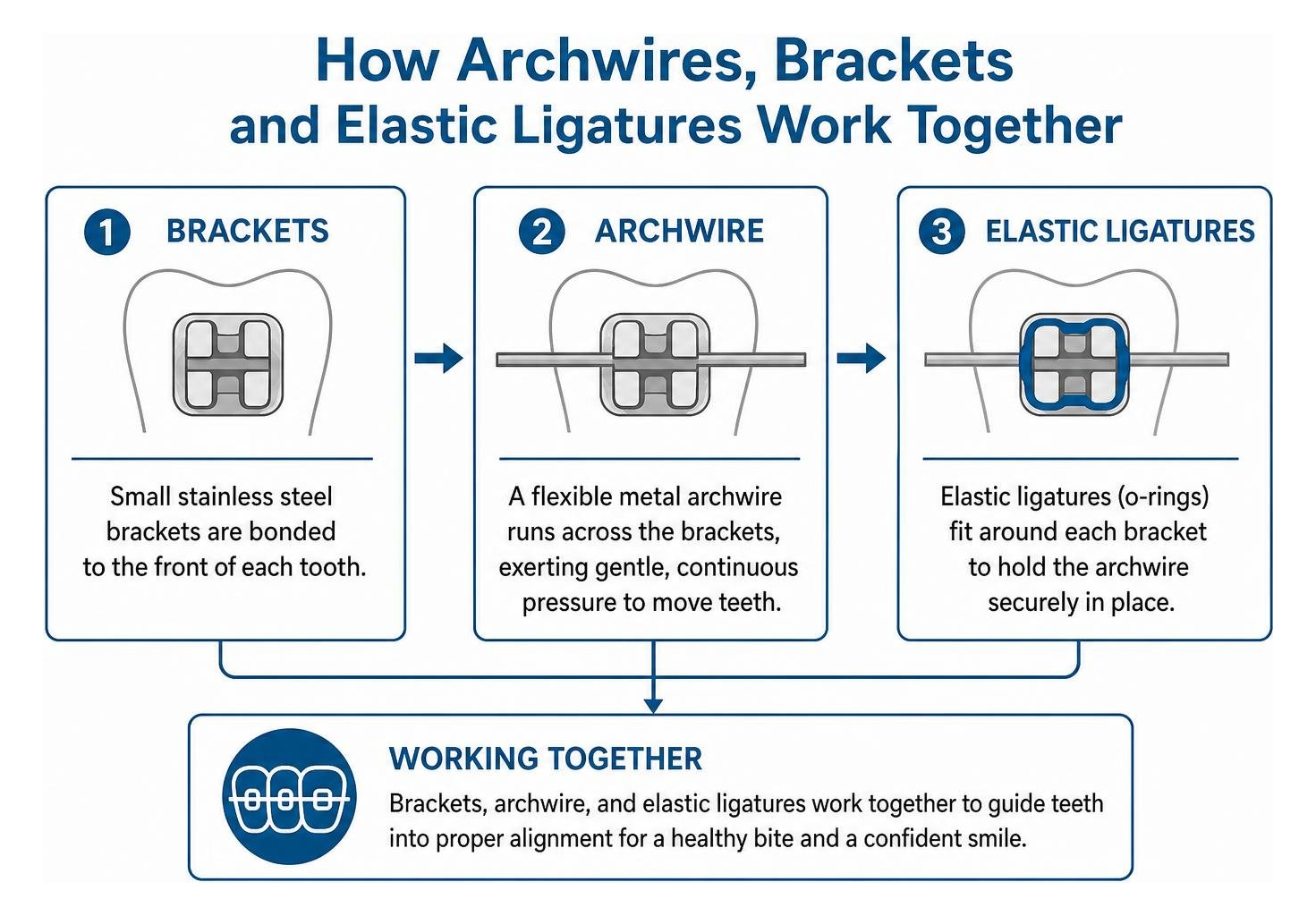
To hold that archwire securely inside the slot of each bracket, we use tiny rubber rings known as elastic ligatures (or “o-rings” and “modules”). These ligatures are the elements that come in a vibrant spectrum of colors. Because the elastics naturally lose their elasticity over time while doing their job, we replace them at your routine adjustment appointments, which typically take place every 6 to 8 weeks.
Across an average treatment plan lasting 18 to 24 months, you will have roughly 12 to 20 color opportunities to refresh your look, experiment with new shades, or switch to a subtle palette.
It is worth noting that ligature ties are separate from the interarch rubber bands used to correct bite alignment. Patients who wear interarch elastics are recommended to change them at least once a day (and often after meals) to maintain constant force.
When planning your aesthetic, standard elastic ligature colors generally fall into these distinct categories:
- Jewel tones: Royal blue, emerald, deep purple, and rich navy
- Pastels: Baby pink, lavender, sky blue, and mint green
- Vibrant neons: Hot pink, electric lime, bright orange, and vivid turquoise
- Neutrals: Metallic silver, cool smoke gray, and pearl
- Specialty bands: Glow-in-the-dark elastics and seasonal glitters
Whether you are evaluating your appliance choices or choosing between ceramic or metal braces, the right ligature shade brings personality to your treatment journey.
Do Clear Ceramic Braces and Aligners Use Colors?
Many patients who want a low-profile look choose clear ceramic braces. These appliances feature translucent, tooth-colored ceramic brackets that blend in naturally with your enamel.
When weighing metal vs ceramic bracket aesthetics, patients often ask whether ceramic brackets use colored elastics. While you can technically place bright neon or dark ligatures on ceramic brackets, most patients select clear or tooth-colored ties to maintain a nearly invisible appearance.
Clear and translucent elastics are naturally more vulnerable to picking up pigments from foods and drinks. Alternatively, self-ligating brackets (which use a built-in metal clip instead of rubber ligatures) and clear aligners do not require elastic modules at all. Learning about the different types of braces helps you determine whether interchangeable band colors fit your personal treatment goals.
Top Braces Color Options for Every Smile and Aesthetic

Color selection involves both personal style and optical science. The colors sitting directly next to your enamel influence how the shade of your teeth is perceived by others. By understanding color theory and contrast, learning how to pick the best color palette for your brackets becomes a fun, creative process.
Cool-toned colors (such as deep blues, navy, violet, and dark teal) naturally offset warm, yellow undertones in human teeth, creating a stark contrast that makes your enamel appear visibly whiter and brighter. Conversely, warm-toned shades with yellow or golden bases can inadvertently accentuate natural tooth discoloration.
Vibrant Braces Color Options for Kids and Teens
For children and teenagers, braces are often seen as an exciting accessory and a form of self-expression. Some of the most popular vibrant color approaches include:
- School Spirit and Local Pride: Pair your school or local sports team colors, such as royal blue and gold or green and white, to show spirit during games and pep rallies.
- Holiday Themes: Rotate your bands to match upcoming celebrations: black and orange for Halloween, red and green for the winter holidays, or pastel pink and blue for springtime.
- Rainbow Combinations: Alternate bright shades across your upper and lower arches for an eye-catching, multi-colored smile.
- Favorite Color Combos: Mix two or three colors you love, like teal and purple or navy and silver, for a look that feels fun and personal.
Subtle and Professional Braces Color Options
For working professionals and adults in corporate settings, discretion is often top of mind. Fortunately, there are several sophisticated colors that maintain a polished look:
- Silver and Smoke Gray: These shades closely match the metallic tone of stainless steel brackets, creating a uniform, sleek appearance that does not draw extra attention.
- Dark Navy Blue: Navy provides the whitening benefits of deep contrast while remaining grounded, classic, and understated in business meetings.
- Muted Slate or Plum: These richer, darker shades offer individuality without the bright intensity of neon colors.
How to Choose the Best Palette for Your Features and Habits
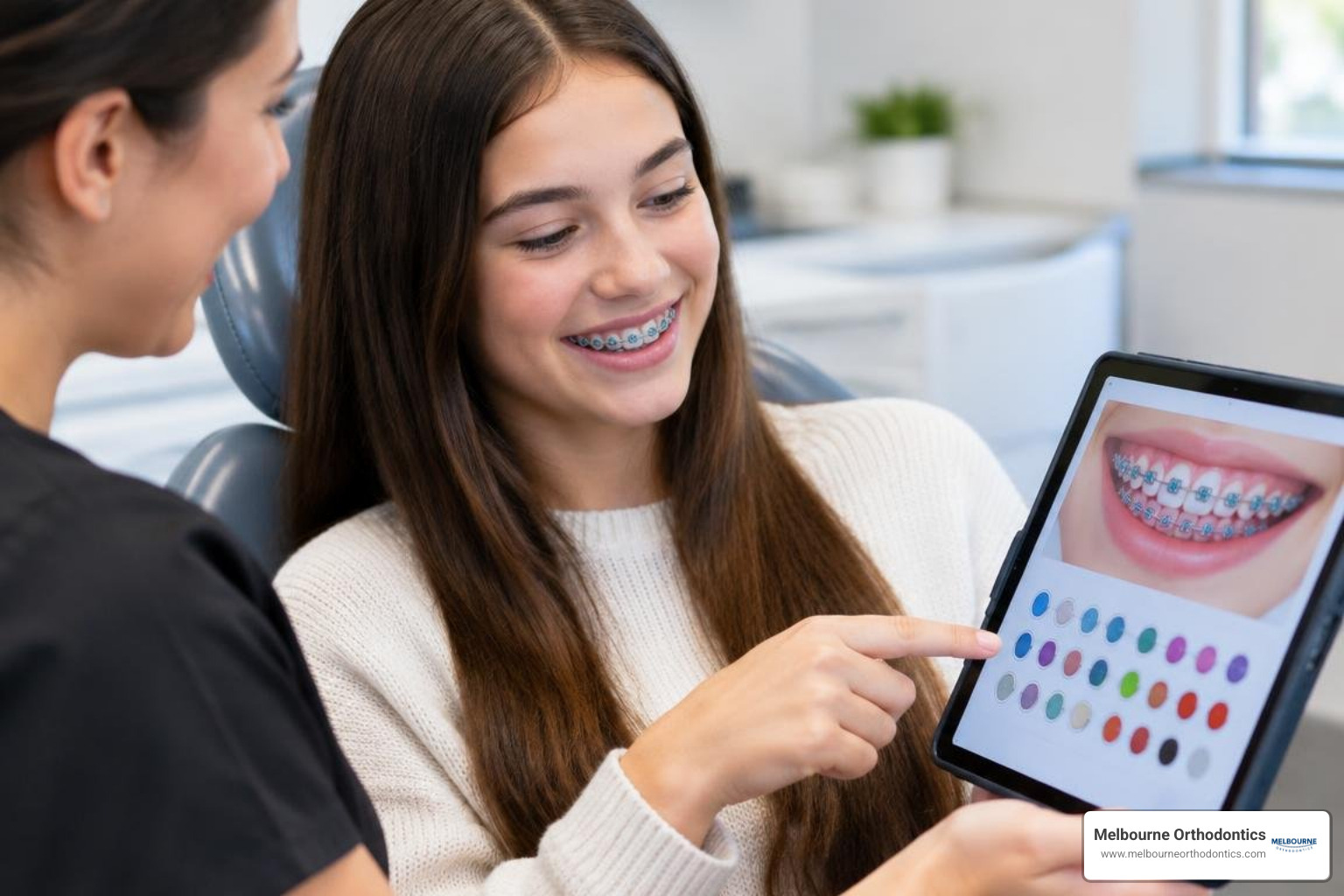
Finding your ideal color palette also means considering your natural complexion, eye color, and daily lifestyle habits.
- Warm Skin Undertones: If your skin has golden, peachy, or olive undertones, rich jewel tones like deep navy, royal blue, emerald green, and berry violet provide an exceptional, flattering complement.
- Cool Skin Undertones: If your complexion has rosy, fair, or cool blue undertones, shades like sky blue, lavender, silver, and cool teal create a harmonious balance.
- Eye Color Coordination: Selecting bands that match or contrast with your eyes—such as sapphire blue for blue eyes or emerald for green and hazel eyes—makes your entire face light up when you smile.
| Color Category | Best Color Choices | Why It Works | Colors to Avoid | Why to Avoid |
|---|---|---|---|---|
| Enamel Enhancing | Navy Blue, Royal Blue, Violet, Deep Teal | High contrast makes natural enamel appear noticeably whiter. | Pale Yellow, Gold, Bright White | Highlights yellow undertones; bright white can make teeth look dull by comparison. |
| Professional & Discreet | Metallic Silver, Smoke Gray, Slate | Blends seamlessly with stainless steel brackets for a uniform look. | Neon Orange, Lime Green, Bright Red | High visual intensity can look out of place in conservative workplaces. |
| Fun & Expressive | Turquoise, Hot Pink, Lavender, Glow-in-the-Dark | Bold, cheerful shades that showcase personal hobbies, sports, and seasons. | Dark Brown, Olive Green, True Black | Can be mistaken for trapped food particles or tooth decay from a distance. |
Colors That Brighten Teeth vs. Colors to Avoid
When browsing the orthodontic color wheel, keeping contrast principles in mind will save you from common aesthetic regrets:
- Colors to Choose for Brightness: Deep royal blue, indigo, plum, dark purple, and rich jewel teal. These saturated cool shades reflect light in a way that minimizes natural tooth warmth.
- Colors to Approach with Caution:
- White: While it seems logical that white bands would make teeth look white, stark white ligatures often make natural enamel appear slightly yellow by comparison. White bands also stain rapidly from food.
- Yellow and Gold: Yellow bands mirror and amplify warm hues in your teeth, creating an optical illusion of discoloration.
- Dark Green and Brown: From a conversational distance, dark brown or olive green elastics can look like spinach or food debris caught in your braces.
- True Black: While black creates high contrast, in photographs it can occasionally read as empty space or dental concerns.
Protecting Elastic Ligatures from Premature Staining
Light-colored and clear elastics are porous, meaning they absorb strong pigments found in common foods and drinks. If you want to keep your bands looking fresh between visits, following our guides on avoiding stains on your clear ceramic braces and tips to keep ceramic braces looking their best will help maintain your smile aesthetics.
To protect your ligatures from discoloration:
- Limit heavy dietary chromogens such as black coffee, black tea, dark colas, red wine, mustard, curry, and rich tomato sauces.
- Rinse your mouth vigorously with water immediately after consuming highly pigmented meals.
- Brush your teeth thoroughly with a soft-bristled toothbrush and fluoride toothpaste after meals, taking care to clean around each bracket.
- Floss daily using orthodontic threaders or a water flosser to eliminate plaque buildup around the elastics.
Frequently Asked Questions About Braces Colors
How often can I change the color of my braces?
You can change the color of your elastic ligatures at each scheduled adjustment appointment, which typically takes place every 6 to 8 weeks. Because we remove and replace the elastic ties to adjust the archwire, every visit is an opportunity to choose a brand-new color palette.
What braces color makes teeth look the most white?
Dark, cool-toned jewel colors—specifically deep navy blue, royal blue, violet, and deep teal—provide the strongest optical contrast against natural enamel, helping your teeth appear brighter and whiter.
Can I preview my braces colors before my adjustment visit?
Yes! You can explore interactive online color pickers or ask our team to see the physical ligature wheel chairside before we place your new ties. Trying out combinations virtually or viewing the physical swatches in person makes it easy to visualize your new look.
Conclusion
Personalizing your braces with custom colors is one of the most enjoyable parts of the orthodontic journey. Whether you prefer vibrant neon shades that celebrate your personality, festive colors for the holidays, or subtle silver tones designed for the workplace, your braces can be tailored to match your unique lifestyle.
At Melbourne Orthodontics, Dr. Chad Reddick and our caring, experienced team are dedicated to creating healthy, confident smiles in a warm and welcoming environment. If you are ready to begin your smile transformation in Melbourne or Indian Harbour Beach, Florida, schedule a consultation to explore orthodontic treatment options with us today!